
- HOMEGROWN WORLD
- HGCREATORS
- HGEXPLORE
- HGVOICES
- HGSHOP
- CAREERS
- ABOUT US
- CONTACT US
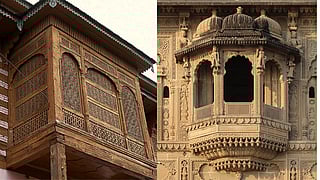
They say “eyes are the windows to the soul”, so are windows, eyes to the home? Maybe.
Long before concrete jungles and uniform rooms became the norm, regional window designs responded intelligently to heat, cold, rain and dust, turning necessity into artistry. From delicately carved lattices that filtered light and guarded privacy to stained glass panes that spoke of global connections and aspiration, these windows framed not just views, but ways of living.
This list brings together a selection of vernacular and historic window styles from across the country, each rooted in its landscape and cultural moment. Many of them are now fading from modern urban homes, threatened by changing lifestyles, materials, and maintenance challenges. Yet, these windows continue to stand as quiet reminders of a time when architecture was deeply responsive to the environment and people who inhabited these spaces.

Kashmiri Pinjra Kari is a centuries-old tradition of wooden latticework that turns ordinary windows into intricate geometric screens. Craftsmen interlock thin strips of light wood, often deodar or walnut, into repeating patterns without nails, relying instead on precise joinery to hold the design together. This delicate lattice serves both aesthetic and practical functions: it filters light, allows ventilation, provides privacy, and softens harsh weather. Rooted in Persian-inspired Islamic geometric art brought to the valley by Shah Hamadani, Pinjra Kari now only seen in mosques and shrines, once adorned windows, balconies, and partitions, creating a poetic interplay of light and shadow in Kashmiri homes.
Locally called khorkhori janala, these louvred windows were brought to Kolkata by the British Empire from the Mediterranean, where they were originally made of marble. In Kolkata, they were crafted from stacked wooden slats attached to the window frame, designed to allow ventilation and offer shade to help escape the city’s tropical heat. The angled slats also permit a clear view of the space outside while preserving the privacy of the homeowners. With their rhythmic lines catching light and breeze alike, khorkhori janala became a defining feature of colonial and vernacular façades. Like the Kashmiri Pinjra windows, khorkhori janala are also disappearing from modern urban homes due to rising dust and the declining availability of the hardware required for upkeep.
Tucked into the facades of traditional homes across Uttarakhand, Likhai windows stand out for their richly carved wooden frames that carry the imprint of the region’s craft traditions. These small, often arched windows are framed with detailed likhai woodcarving, a craft where artisans carve patterns of swans, lotuses, creepers, parrots, and geometric designs into locally sourced woods like walnut, horse chestnut, or Himalayan yew. The carvings reflect nature, folklore, and sometimes Tibetan influences, and were once a marker of a household’s prosperity and cultural identity. Today, these beautifully crafted windows remain treasured features of traditional hill homes, even as the craft faces decline with modernization.
Seen in palaces, forts, and period films alike, the jharokha is synonymous with Rajasthani craftsmanship, beauty, and architectural drama. Projecting elegantly from sandstone facades, these overhanging windows are intricately carved with floral and geometric motifs. Beyond their decorative appeal, jharokhas were designed for ventilation and to allow residents, especially women, to observe street life discreetly. They were also a symbol of wealth and status, depending on the material and level of craftsmanship required for the carvings. Their layered screens and delicate brackets create shifting patterns of light and shadow.
Framing the homes in Chettinad, Tamil Nadu, these stained glass windows reflect a unique blend of local craftsmanship and global influence. Set within heavy teak frames, these windows feature brightly coloured glass panes arranged in geometric and floral patterns, filtering sunlight into jewel-toned interiors. Introduced through trade links with Southeast Asia and Europe, the stained glass became a marker of prosperity and cosmopolitan taste. More than decorative elements, these windows softened harsh light, aided ventilation, and lent Chettinad mansions their distinctive, luminous character.
Lining the pastel façades of Franco-Tamil homes, these windows reflect the quiet elegance of Indo-French design. Characterised by tall proportions, wooden shutters, and arched frames, they balance European symmetry with Tamil climatic sensibilities. Often painted in soft blues, greens, or whites, the windows were designed to invite light and breeze while shielding interiors from heat and rain. Their understated detailing and rhythmic repetition give Franco-Tamil streetscapes a distinctive charm, where colonial influence merges seamlessly with local craft and everyday life.
If you enjoyed reading this, here’s more from Homegrown:
The Fading Light Of Goa’s Oyster-Shell Windows
Aashim Tyagi’s ‘Balasinaurus’ Reveals The Afterlife Of Art Deco In Small-Town Gujarat
Grounded's 'Toybox' Is Where A 160-Year-Old Goan Home Learns To Play Again
