
- HOMEGROWN WORLD
- HGCREATORS
- HGEXPLORE
- HGVOICES
- HGSHOP
- CAREERS
- ABOUT US
- CONTACT US

This article looks at 'Soo Be It', a café in Pune set inside a traditional wada, focusing on how the space retains the structure and layout of these historic Maratha-era homes. It highlights the café as part of a broader trend of adaptive reuse, where older buildings are repurposed for contemporary use while preserving their architectural character.
In Maharashtra, a wada refers to a traditional residential structure that took shape during the Maratha period — large, inward-looking homes built around courtyards, with thick walls, timber frameworks, and a layout designed for extended families. These spaces were planned for shared living, seasonal shifts, and long-term use. Pune still holds many of them with many locations camed after these homes like the Shaniwar Wada, Vishrambaug Wada, and Nana Wada though most now sit in varying states of disrepair or have been repurposed over time.
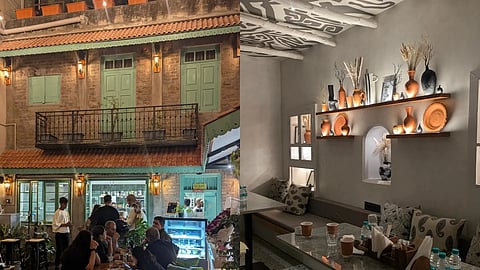
Soo Be It is a new café in the city that emerges from one such wada Tilak Road, retaining its original plan instead of rebuilding it into a standard café space. The building is divided into multiple rooms connected by narrow passages and short flights of stairs. The experience unfolds as you move from one section to another.
Each room has been set up with its own seating style and design. Some have floor cushions and low tables, others are arranged with chairs and compact tables. A few corners feel more enclosed, while others open up slightly, allowing for larger groups in a more restaurant-style arrangements. The material character of the Wada remains visible throughout, with wooden beams running across ceilings, and metal craft on the railings, and a spacious courtyard where the cafe hosts live music in the evenings. The menu keeps to familiar café staples — coffee, cold beverages, and a range of comfort continental food, including sandwiches, burgers, pizzas, desserts and baked goods.
Soo Be It Cafe is a part of a wider shift towards adaptive reuse, a way of working with older buildings that has been gaining ground across Indian cities over the past decade as more people begin to see value in keeping these structures active instead of letting them fall into disrepair or reducing them to static heritage sites. You see it in different forms — havelis turned into boutique stays in Rajasthan, old mills converted into cultural spaces in Mumbai, colonial homes in Kolkata reopening as cafés and studios — and in each case, the intent is to retain the architectural character of the building while giving it a function that fits contemporary use. In Pune, where wadas were once central to how the city was built and inhabited, turning one into a café brings it back into circulation, allowing the building to remain part of the city’s everyday life instead of slipping into the background as a relic.
Follow Soo Be It Cafe here.
If you enjoyed reading this, here's more from Homegrown:
How Bengaluru’s Iconic Bible Society Building Transformed Into A Center Stage For Rock Music
Cowies: A Slice of Mumbai’s Past Has Been Turned Into A Modern Traveller's Retreat
How A Heritage Calcutta Home Has Been Restored As A Cafe & A Thriving Culture Space
