
- HOMEGROWN WORLD
- HGCREATORS
- HGEXPLORE
- HGVOICES
- HGSHOP
- CAREERS
- ABOUT US
- CONTACT US

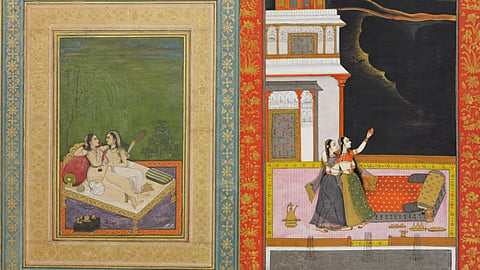
Developed in eighteenth-century Lucknow by poets such as Saadat Yaar Khan ‘Rangin’, Rekhti was a unique genre of Urdu poetry written in women’s voices. Through colloquial language, sexual humour, and erotic imagery, Rekhti explored female desire and same-sex relationships, offering a rare glimpse into the complex histories of gender and sexuality in South Asia.
In 18th-century Lucknow, Saadat Yaar Khan (1755-1810) — also known by his pen name ‘Rangin’ — developed a genre of Urdu poetry he called ‘Rekhti’. Unlike the classical form of Persianised Urdu ghazals known as ‘Rekhta’, these poems were written in women’s voices and expressed desire and longing between women using feminine idioms. According to Delhi-based historian Rana Safvi, “...this genre was not for genteel gatherings where women would be present, as it was thought to be voyeuristic and aimed at titillation. Only in a decadent society would a woman talk so openly of her sexuality or her lovers.”
Rekhti poetry is remarkable for its use of colloquial expressions to hint at same-sex relationships between women, as well as women who indulge in such relationships. Of course, women rarely wrote these poems — it was primarily men who wrote them, and who read them in mushaira or gatherings of poets, often dressed as women. While purists scoffed at Rekhti as obscene and corrupt, these poems made space for queer men such as Saadat Yaar Khan, whom historian Ali Jawad Zaidi described as “a gay, dissolute and handsome young man”, and his “good friend” Insha Allah Khan “Insha” (1756-1817) to voice their desires through invented female personas.
“tis peruu mein uthhi ohii meri jaan gayi / mat sata mujhko do-gaana tere qurban gayi” (my pelvis aches, oh my life is going / don’t harass me, do-gaana I beg of you)
Saadat Yaar Khan “Rangin”, translated by Ruth Vanita in ‘Gender, Sex, and the City’
Rekhti poets broke social taboos by centring women’s desire and sexuality in popular literature. They built on the pre-existing tradition of devotional Bhakti poetry by male poets, who expressed women’s desire through Radha’s divine longing for Krishna. However, while earlier Bhakti and Sufi poets framed this desire as a more spiritual form of love and longing, Rekhti poets such as Rangin, Insha, Dogana, and Jur’at (the pen name of Shaikh Qalandar Baksh, meaning ‘audacity’) used terms like ‘chapti’, meaning 'sticking, clinging, and rubbing together', to refer to what we now call 'scissoring', and 'do-gaana' to refer to women-loving-women, normalising same-sex desire in early-modern Urdu poetry.
Rekhti poems are thematically similar to the erotic poetry of the ancient Greek poet Sappho of Lesbos (the origin of the demonym ‘Lesbian’, originally meaning ‘inhabitant of Lesbos’ and later referring to homosexual women) in their veneration and celebration of women’s love, desire, beauty, and the power of sexual energy in human life. Often, the poets referred to their deep knowledge of women’s interior lives through their close associations with ‘tawaif’ or courtesans and ‘khangi’, or ‘parda-nasheen’ women who engaged in clandestine sex work at their home, according to Professor Choudhri Mohammed Naim (3 June 1936 – 9 July 2025), an Indian-American scholar of Urdu language and literature.
Rekhti flourished in the late 18th- and early 19th centuries in poetic gatherings led by Saadat Yaar Khan Rangin, Insha Allah Khan Insha, and their contemporaries in Lucknow and Delhi. These cities were major centres of Indo-Persian culture where courtesans, poets, musicians, and aristocrats participated in highly sophisticated literary circles. The genre’s vocabulary often drew from the speech of women in domestic spaces, courtesan culture, and urban marketplaces instead of the elevated Persianised register associated with ‘Rekhta’ poetry.
By the 19th century, changing social norms under British colonial rule and emerging middle-class reform movements increasingly condemned Rekhti as vulgar or obscene. Many texts disappeared from literary circulation, and later Urdu literary histories often marginalised or ignored the genre altogether. Still, the genre was a precursor to the feminist poets of the mid-20th century, such as Kishwar Naheed, Parveen Shakir, and Zehra Nigah, who wrote about women’s sexuality and sexual proclivities and no longer needed men to speak for them in women’s voices.
Further reading: To learn more about Rekhti poetry, read Professor C. M. Naim’s essays on Rekhti, especially ‘The Theme of the Woman in Rekhti’ and ‘Transvestic Words? The Rekhti in Urdu’ and Ruth Vanita’s ‘Gender, Sex, and the City’.
