
- HOMEGROWN WORLD
- HGCREATORS
- HGEXPLORE
- HGVOICES
- HGSHOP
- CAREERS
- ABOUT US
- CONTACT US
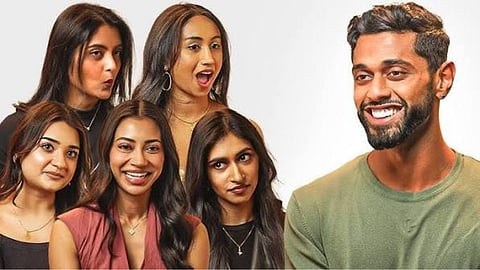
This article talks about 'Desi Me Dating', PopShift's YouTube speed-dating series, has become a cult favourite for its honest portrayal of modern South Asian romance. Through awkward encounters, cultural conversations, and moments of genuine connection, the show explores how diaspora communities navigate dating, and love in an increasingly digital world.
Olivia Rodrigo said in her latest album: 'They say modern love is cruel endeavour', and if you've spent any amount of time on the internet over the last few years, you've likely encountered the same complaint repeated ad nauseam, and most people have found themselves longing for something that feels a little more human.
Enter 'Desi Me Dating', a YouTube-based blind dating series by PopShift that attempts to reimagine modern South Asian dating through the lens of speed dating. What began as a niche experiment has since evolved into a multi-season show with thousands of viewers tuning in to watch strangers navigate awkward introductions, difficult questions, unexpected chemistry, and of course, the painful realities of contemporary romance, making it great television.
Participants meet without seeing each other first and are guided through a series of conversations, games, and prompts designed to uncover compatibility beyond appearances. The questions move anywhere from light-hearted icebreakers to discussions about family expectations, cultural values, dealbreakers, and relationship goals, unearthing all the sometimes comically silly and serious conversations we have while we get to know someone first.
Dating shows have long been dominated by Western narratives, often leaving South Asian audiences to either adapt to those frameworks or search for representation elsewhere. Desi Me Dating centres the experiences of South Asians in the diaspora, creating room for discussions around identity, immigrant family dynamics, language, and ultimately the balancing act between tradition and modernity. As one review noted, the show's appeal lies in presenting dating that feels "spicy, awkward, and realistic" while focusing on ordinary people rather than aspiring influencers or reality TV archetypes.
What Desi Me Dating captures particularly well is the unique tension many South Asians in the diaspora experience when navigating relationships. While participants are often shaped by so-called Western ideals of individualism, independence, and casual dating, they are simultaneously influenced by cultural expectations. This leads to a kind of romantic double consciousness: wanting the freedom to choose one's own partner while still carrying the weight of inherited traditions and community expectations.
Across episodes, contestants often find themselves negotiating questions about whether a partner understands their culture, how important family approval is, or what aspects of their heritage they hope to preserve. Questions that are considered across dating in the diaspora and how dating also involves reconciling multiple versions of themselves that exist between cultures.
Of course, not every date ends in romance. That's part of the appeal with the awkward pauses, mismatched expectations, and sometimes hilarious moments of incompatibility. In one instance, participants from a previous season reportedly continued their relationship after filming wrapped.
And without a doubt, parts of the show feel scripted and can be genuinely painful to watch through the lens of second-hand embarrassment. Some of the men are unabashed mummy's boys; some of the women arrive with lists of non-negotiables so specific they seem impossible to satisfy. Conversations occasionally veer into territory that feels superficial or hopelessly awkward, but that's also part of the show's charm.
Because modern dating and finding love, has always been messy and sometimes even uncomfortable, Desi Me Dating reveals and embraces the chaos of finding a genuine connection, which is more often than not awkward and occasionally a little ridiculous.
