
- HOMEGROWN WORLD
- HGCREATORS
- HGEXPLORE
- HGVOICES
- HGSHOP
- CAREERS
- ABOUT US
- CONTACT US
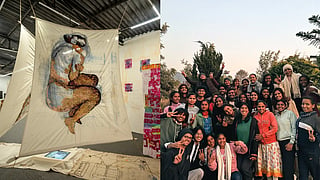

Independent collectives across India are creating spaces where art, education, performance and community engagement become ways of addressing questions of identity, social justice, and collective futures. Working across issues such as caste, gender, ecology, Indigenous knowledge and access to opportunity, groups like Maraa, Sajhe Sapne, Anga Art Collective, Budhan Theatre, and the Yusmarg Collective bring people together through theatre, public art, education, publishing, film, and grassroots initiatives that place culture at the centre of community dialogue and social change.
Cultural theorist Stuart Hall argued that culture is where ideas about identity, power, and society are constantly being shaped, debated, and reworked. Films, music, theatre, festivals, storytelling, and even everyday creative practices all become part of the conversations through which people make sense of their lives and imagine different futures.
Across India, a growing number of independent collectives are putting this idea into practice. Working across art, education, performance, publishing, community spaces, and grassroots organising, they bring people together by centering issues like caste, gender, labour, ecology, Indigenous knowledge, and access to opportunity. Whether through a theatre performance in a neighbourhood, a public film screening, a bamboo library in a forest, or a village learning centre, these collectives create spaces where culture becomes a way for communities to gather, exchange ideas, and shape the conversations that matter.
Maraa is a media and arts collective based in Bengaluru and Delhi that uses documentary films, community radio, theatre, publishing, and public festivals to champion social justice. Their work centres marginalised voices and narratives around caste, gender, labour, migration, and public space through projects that are deeply rooted in communities. They have produced documentaries such as those chronicling the building of the Bangalore Metro, co-founded Freeda, an intergenerational theatre troupe in Madhya Pradesh with rural and Dalit women, organised community screenings of independent films in public spaces across cities, and have run initiatives like 'Kaay Boltay', where stand-up comedy workshops equip marginalised individuals to critique the world through their own lived experiences. Maraa also co-produces podcasts and radio documentaries, publishes material for workers, trade unions, and students, and curates the 'October Jam', a free annual public arts and performance festival in Bengaluru.
Sajhe Sapne is a nonprofit that works with marginalised rural women, known as Sapnewaalis; creating pathways between higher education and aspirational careers. Through village-level Sapna Centers, the collective runs a nine-month to one-year alternative college programme that combines management, technology, entrepreneurship, and practical workplace skills in everyday spoken languages. Alongside training in project management, web development, and content creation, Sapnewaalis receive guaranteed job placements through partnerships with companies and organisations, followed by up to a year of on-the-job mentorship. Leadership development, emotional awareness, and entrepreneurial thinking are woven into the programme, helping first-generation learners build agency and pursue long-term financial independence.
Founded in Assam in 2010, Anga Art Collective brings together contemporary art, indigenous ecology, community-led pedagogy, and agrarian histories through a decentralised practice that works closely with village communities, activists, and ecologists across Northeast India. One of its central initiatives is 'The Granary (Bharal)', a bamboo-based library and community space in the Rani Reserve Forest that hosts storytelling sessions, film screenings, and conversations around ecology and regional culture. Through 'kNOw School', an award-winning travelling education project, participants explore contemporary art using locally available materials outside conventional academic structures. Their practice also extends to large-scale, site-specific installations responding to climate change and local landscapes, including 'Unseasonal Wind' at the Sharjah Biennial, alongside exhibitions at the India Art Fair and the Dhaka Art Summit.
Budhan Theatre is an Ahmedabad-based community arts collective founded in 1998 by members of the Chhara community. Using street plays, experimental theatre, documentary filmmaking, and community education, the collective advocates for the rights of India's Denotified and Nomadic Tribes while addressing police brutality, historical stigma, rehabilitation, and housing. Productions such as 'Budhan Speaks', named after a Sabar tribal man who died in police custody, document lived histories and experiences from within the community. Beyond performance, Budhan Theatre engages policymakers through conferences and advocacy, produces films that explore everyday realities and poverty among Denotified Tribes, and runs informal schools and workshops where children and adults learn acting, writing, and other skills, nurturing a new generation of community 'artivists'.
The Yusmarg Collective is a Kashmir-based platform for cultural practitioners and visual artists that came together in 2019 in the aftermath of the revocation of Article 370 and the COVID-19 pandemic. It offers artists a space to share anxieties, collaborate, and navigate censorship through collective practice. Their work explores counter-memorialisation, spatial interventions, and durational performances, creating projects that engage with the unresolved realities of the region while resisting singular narratives. Alongside exhibitions such as 'For Now, Unquiet' at Triveni Kala Sangam under the India Art Fair's Young Collectors Programme, the collective organises Baithaks, residencies focused on experimentation, film screenings, reading sessions, and listening circles that encourage creative inquiry and exchange. Their practice spans printmaking, digital media, installation art, and found-object interventions, bringing together multiple disciplines under one collaborative platform.
If you enjoyed reading this, here's more from Homegrown:
Homegrown Zine Collectives Building Communities Around Art, Activism, & Everyday Life
Support A Chennai Collective Empowering A Generation Of Marginalised Photojournalists
The Sattya Media Arts Collective Is Shaping A New Era Of Nepali Culture & Creativity
