
- HOMEGROWN WORLD
- HGCREATORS
- HGEXPLORE
- HGVOICES
- HGSHOP
- CAREERS
- ABOUT US
- CONTACT US

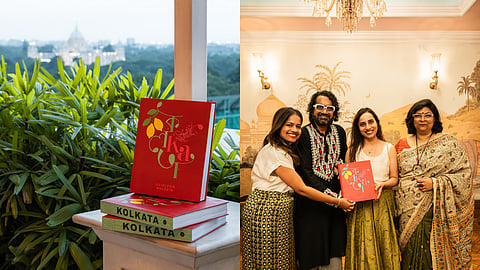
Heirloom Cities’ second release, 'Kolkata: The People, Kitchens and Streets of the City of Joy', explores the city’s layered culinary history through personal essays, photography, illustration, and design.
There is no straightforward way to tell the story of Kolkata through its food. The city’s culinary identity has been shaped over centuries by migration, trade, colonialism, displacement, and the everyday traditions of the communities that have called it home.
'Kolkata', the second volume from the design-led publishing house Heirloom Cities, attempts to capture this layered history. Following its inaugural book on Mumbai, the 378-page collectible coffee table book brings together essays, personal narratives, photography, illustration, and design to document the city through its myriad food cultures.
For Sri Bodanapu, founder of Heirloom Cities, the project began with the recognition that Indian food is often flattened into broad categories for global audiences, while the distinct culinary histories of individual cities remain underrepresented. Heirloom Cities was conceived as an alternative to both the traditional cookbook and academic food writing: a visually immersive form of cultural documentation centred on people, traditions, and techniques. “As cities are getting more and more homogenised, it felt imperative for us as storytellers to document these things — not just the restaurants or recipes, but the stories of the people, traditions, and techniques that exist in these cities,” Bodanapu said at the Kolkata launch of the book at The Glenburn Penthouse on 28 July.
After Mumbai, Kolkata felt like a natural choice, she said. The city’s culinary landscape carries the imprint of its history as a colonial capital and global trading centre, alongside generations of migration and exchange. Yet Bodanapu felt its breadth remained insufficiently documented for those outside the city.
Edited by Madhushree Basu Roy and Anindya Sundar Basu (who also led the book’s photography), Kolkata brings together contributions from Malini Banerjee, Amrita Das, Priyadarshini Chatterjee, Pinaki Bhattacharya, and Dolon Dutta Chowdhury. Instead of attempting to produce an exhaustive guide, the editorial team made an early decision that the book would be built from what they described as “small pockets”: stories about traditions, rituals, communities, and domestic lives that could collectively reveal the city’s larger culinary landscape. “It’s not going to be an encyclopaedia. It’s not going to be a Wikipedia. It has to be stories. It has to be culture. It has to be tradition. It has to be rituals,” Madhushree said about the editorial team’s approach to the volume.
According to Nandini Thirani, the book’s designer, the city also informed the volume’s visual language. Its spine takes inspiration from Bengal’s kantha embroidery tradition; the journey of the hilsa becomes a visual narrative; and terracotta, Bengali typography, restaurant signage, old menus, architecture, and street culture appear and reappear throughout its pages.
“Unlike a traditional book, a Coffee Table book is experienced and not read cover to cover. As the design team, we were very intentional about the artworks, illustrations, typography and icons we created, the layout of each page, the selection of photographs, the choice of colours or the placement of text. We wanted to make sure that each page is a visual delight, telling a little tale about Kolkata, while keeping true to the overall brand vision and narrative,” Thirani said. The idea is for the book to be experienced non-linearly, opened anywhere, lingered over, and returned to — revealing something new each time.
Heirlooms Cities has collaborated with Artchives India to release a limited edition tote bag to mark the launch of the collectible book. Buy the tote here.
Heirloom Cities’ ‘KOLKATA: The People, Kitchens and Streets of the City of Joy’ is now available through Heirloom Cities, Amazon, and select bookstores. Follow @heirloomcities on Instagram to learn more.
