
- HOMEGROWN WORLD
- HGCREATORS
- HGEXPLORE
- HGVOICES
- HGSHOP
- CAREERS
- ABOUT US
- CONTACT US
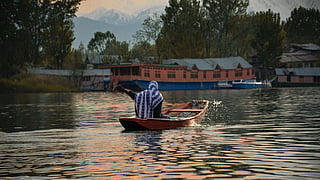

Kashmiri fiction is moving beyond conventional conflict narratives toward intimate stories of memory, migration, exile, and fractured everyday life. Featuring works by Muddasir Ramzan, Karan Mujoo, Mirza Waheed, and Hari Krishna Kaul, this Homegrown reading list explores how recent Kashmiri literature blends realism, folklore, satire, and psychological depth to portray life in and beyond the Valley.
Contemporary Kashmiri fiction has undergone a striking transformation over the past decade. While earlier literature from and on Kashmir often sought to explain the conflict to outsiders through political narratives, many recent novels and short stories instead turn to the more intimate terrains of fractured families, suspended lives, migration, memory, boredom, waiting, and the emotional afterlives of violence. Instead of treating Kashmir solely as a geopolitical crisis, these writers explore it as a lived psychological landscape shaped by uncertainty, longing, and the interruption of ordinary life.
Formally, too, contemporary Kashmiri fiction has become increasingly experimental. Younger writers frequently employ fragmented timelines, episodic structures, nonlinear narration, surrealism, absurdism, and folk motifs to mirror the disorientation of life under militarisation and prolonged instability. Recent years have also seen a renewed interest in Kashmiri Pandit memory, exile, and the fraught complexities of return and belonging. At the same time, translations have brought major Kashmiri-language writers such as Hari Krishna Kaul to wider English-language readerships, expanding the literary map of the region beyond English-language fiction alone.
The books in this reading list reflect these evolving literary currents. Moving between realism and myth, satire and tragedy, personal memory and collective history, they offer deeply human portraits of Kashmir that resist simplification:
Kashmiri author Muddasir Ramzan’s debut novel ‘The Man From Kashmir’ is an episodic, interconnected story set in the fictional Kashmiri town of Poshmarg, tracing generations of one sprawling family across mythic pasts, militarised presents, and dystopian futures. Moving between folk horror, political violence, spiritual crisis, and intimate human struggle, Muddasir Ramzan portrays ordinary people navigating life in a landscape shaped by fear, memory, and survival. From witches in forests to bunker-sheltered cities shattered by bombs, the book blends folklore and realism to explore Kashmir as both a lived reality and a psychological terrain. Written with stark lyrical precision, it examines how conflict reshapes love, faith, family, and the fragile possibility of hope.
Karan Mujoo’s ‘This Our Paradise’ traces the intertwined lives of two Kashmiri families across the decades surrounding the insurgency of the late 1980s and 1990s. Beginning with a seemingly idyllic childhood in Srinagar and a rural Lolab Valley marked by poverty and disillusionment, the novel follows two boys whose lives are reshaped by political upheaval, religious radicalisation, and the rise of militancy in Kashmir. As separatist movements transform the social fabric of the region, both families experience exile, loss, and the collapse of the world they once knew. Through intimate personal histories, Karan Mujoo examines how ordinary people become caught within forces far larger than themselves, losing their homes, identities, and sense of belonging in profoundly different ways.
Mirza Waheed’s ‘The Book of Gold Leaves’ is a tragic love story set in Srinagar in the early years of the Kashmir conflict. Faiz, a young papier-mâché artist, meets Roohi, a woman yearning for love and escape, at a local shrine, and the two begin a tender romance as society slides towards violence and unrest. As war, political upheaval, and militarisation tighten their grip on everyday life, the lovers are forced to confront impossible choices between desire, duty, survival, and resistance. Blending lyrical prose with historical tragedy, Mirza Waheed’s novel mourns the fragile futures destroyed by conflict and the countless lives shaped by longing, loss, and interrupted possibility.
Hari Krishna Kaul’s ‘For Now, It Is Night’ is a collection of stories that captures the emotional and social dislocations caused by political instability and displacement in Kashmir. Through sharply observed, darkly humorous narratives, Kaul explores themes of exile, alienation, corruption, and the erosion of community, language, and belonging. His characters — stranded travellers, displaced families, anxious friends, and ordinary survivors — navigate rapidly changing worlds through uneasy compromises, resilience, and wit. Blending empathy with biting satire, the stories reveal the fragile absurdities of everyday life amid crisis. Beautifully translated into English as part of a collaborative project by Kalpana Raina, Tanveer Ajsi, Gowhar Fazli, and Gowhar Yaquoob, the collection introduces Kaul’s poignant, deeply humane writing to a wider readership.
