
- HOMEGROWN WORLD
- HGCREATORS
- HGEXPLORE
- HGVOICES
- HGSHOP
- CAREERS
- ABOUT US
- CONTACT US

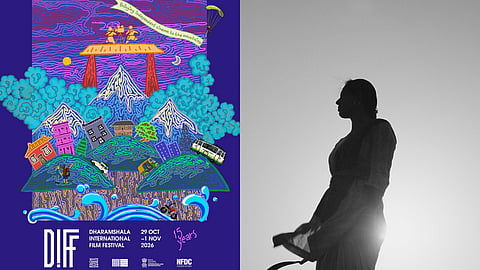
The Dharamshala International Film Festival celebrates its 15th edition from 29 October to 1 November 2026, showcasing independent cinema, workshops, and masterclasses. Highlights include premieres of films exploring themes like identity, memory, and belonging, alongside international selections and participatory activities at the Tibetan Children’s Village in Upper Dharamshala.
The Dharamshala International Film Festival (DIFF) is returning for its landmark 15th edition later this month. Taking place from 29 October to 1 November 2026 at the Tibetan Children‘s Village (TCG) in Upper Dharamshala, the festival brings four days of independent cinema, conversations with filmmakers, workshops, and masterclasses to the Himalayan foothills. Founded in 2012 by filmmakers Ritu Sarin and Tenzing Sonam, the festival has established itself as a platform for emerging filmmakers and distinctive cinematic voices from India and around the world.
Opening with the South Asian premiere of Rima Das‘s ‘Not a Hero’, the festival’s 15th edition brings together stories exploring family, memory, identity, and belonging. Among the programme’s highlights is ‘A Fox Under a Pink Moon’ by Mehrdad Oskouei, made with Afghan artist Soraya Akhlaghi, which follows her attempt to reunite with her mother in Austria. Paromita Vohra’s ‘Working Girls’ examines women’s often-invisible labour across India, while ‘Shadowbox’, directed by Tanushree Das and Saumyananda Sahi, follows a Kolkata family navigating a fragile domestic equilibrium. Gurvinder Singh’s ‘Rehmat’, on its India premiere, weaves together four stories by Punjabi writer Ajeet Cour to explore displacement, memory, conflict and compassion in contemporary Punjab.
The selection also includes ‘Mast Mahila Mandali’, a genre-bending documentary co-created by ten women from Mumbai’s eastern suburbs, and Yashasvi Juyal’s ‘The Ink Stained Hand and The Missing Thumb’, which follows a remote toll booth worker’s death and resurrection. The festival closes with the India premiere of Shashank Walia’s critically-acclaimed ‘Birds in the Dark’, which follows a disillusioned police agent and a man wrongly accused of a crime. When the two reconnect in a caste-divided rural community, an unexpected love begins to take shape between them..
This year’s international selections include Sara Dosa’s ‘Time and Water’, which considers family archives, a changing homeland and the climate crisis through Icelandic writer Andri Snær Magnason’s reflections; Óliver Laxe’s ‘Sirāt’, about a father and son searching for a missing daughter across the Moroccan desert; and ‘Celtic Utopia’, which examines Ireland’s folk music traditions and cultural memory. Other highlights include Ridham Janve’s ‘Hunter’s Moon’, set in the Upper Dhauladhar mountains, and Shaunak Sen’s ‘Termite’, set in the lanes of Old Delhi.
Beyond screenings, the Kiran Nadar Museum of Art will offer participatory activities, including cyanotype printing, film-strip weaving, and a collaborative mosaic mural. DIFF’s wider programme also includes the Himalayan Film Fellows Programme, which supports emerging filmmakers from the Indian Himalayan Region.
The Dharamshala International Film Festival (DIFF) will return to Tibetan Children’s Village (TCV), Upper Dharamshala, from 29 October to 1 November 2026. Learn more here.
If you enjoyed reading this, here’s more from Homegrown:
Does A New Indian-American Voice Actor Really Solve The Problem With Apu?
Creep It Real: A Homegrown Halloween Watchlist
‘Birds On Ice’ Is A Story About Childhood, Hope, & Ice Hockey In Ladakh
