
- HOMEGROWN WORLD
- HGCREATORS
- HGEXPLORE
- HGVOICES
- HGSHOP
- CAREERS
- ABOUT US
- CONTACT US
An observational look at the Jai Paul phenomenon, exploring how a stolen laptop, bad music journalism, and a decade of total silence transformed a quiet London producer into an internet legend, and why his 2023 Coachella debut finally shattered the illusion.
We live in a culture obsessed with oversharing. Pop stars broadcast their breakups, morning routines, and existential crises in real time on social media, terrified that forty-eight hours of silence will cause the algorithm to forget they exist. Then there is Jai Paul — a guy who dropped a couple of boundary-shattering demos, vanished into thin air for a decade, and somehow became a larger, more influential digital deity by doing nothing at all.
I came to his music through some late-night research, tumbling headfirst down the r/JaiPaul rabbit hole while piecing together his story. Somewhere right now, another curious listener is clicking on 'Jasmine' for the first time, opening an archived Reddit thread from 2014, and getting recruited into a cult dedicated to a musician who just wanted to be left alone.
To understand the absurdity of the Jai Paul phenomenon, you have to rewind to 2011. A music student from Rayners Lane, London signed to XL Recordings and uploaded a track called 'BTSTU'. It broadcast a sound from a dystopian neon future — a chaotic mix of Prince-esque falsettos, stuttering basslines, and heavy compressions that made the audio seem like it was grasping for air.
Drake sampled it on 'Dreams Money Can Buy'. Beyoncé sampled it on 'End of Time'. A generation of bedroom producers realised they could throw traditional pop mixing rules in the garbage, provided the 'vibes' were right.
He followed it in 2012 with 'Jasmine,' an echo-pop track that sent music forums into a tailspin. Diving into his discography while researching his story, that gritty, dust-covered bassline immediately stood out for how far ahead of its time it felt. Journalists started sharpening their knives, preparing to crown him the definitive sound of the decade. The stage was set for a massive debut album. The world was begging him to take their money. And then, the internet ate itself.
On an April night in 2013, a sixteen-track ZIP file appeared on a random Bandcamp page under Jai Paul’s name. It contained unmastered audio drafts, warped Bollywood samples, audio rips from Gossip Girl, and heavy-handed covers. Fans scrambled to shell out £7 for the download, convincing themselves this was a guerrilla marketing campaign.
A laptop had been stolen, and the files were dumped online without his consent.
Music publications, starved for content and desperate for clout, put an unmastered, stolen draft on their official Year-End 'Best Of' lists. Pitchfork ranked a collection of stolen audio files at #20 on their top 50 albums of 2013. The Guardian ranked it at #28. Professional critics were reviewing a crime scene. Thousands of listeners were religiously memorising unmixed, half-finished audio exports from a stolen hard drive, while publications elevated a musician's personal trauma to 'avant-garde genius' because the exclusivity felt intoxicating.
Traumatised by the breach, Jai pulled the plug completely. He released no follow-up single and gave zero interviews. He became the internet’s favourite urban legend — a phantom figure whose myth grew larger with every year he remained silent.
The mythologising was a two-way street. The internet fetishised his absence, and Jai's withdrawal weaponised it. By refusing to engage, he allowed a handful of officially released tracks to bear the weight of an age's expectations. Reddit boards morphed into digital crime labs dissecting minor audio frequencies, pixelated background photos, and rumours of local London sightings. Dozens of copycats tried to mimic his blown-out synth textures, but the hype machine created something no actual record could live up to. The mythology arguably outgrown the actual music over time. In an age where algorithms demand continuous output, total radio silence turned out to be a potent branding tool.

Six years passed before he broke his silence. In 2019, he officially released those stolen demos under the title 'Leak 04-13 (Bait Ones)', reclaiming his narrative and donating a portion of the proceeds to charity. Alongside the album, he posted a vulnerable letter admitting that the leak felt like a catastrophic violation that permanently derailed his creative life. He was a guy genuinely hurt by how quickly the industry swallowed up his raw work.
The final act of this circus arrived when he stepped onto a stage for the very first time. Hours before taking the Mojave stage at Coachella in 2023, he logged onto Reddit — the platform that spent a decade dissecting his life — and left a brief, terrified note for his fans:
"I am absolutely shitting it."
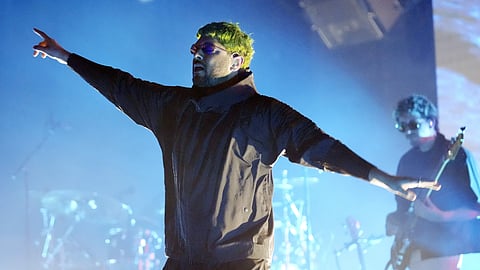
When he walked out under the desert lights in oversized gear, dark ski goggles, and tiger-striped hair, he looked like a guy dragged directly out of his bedroom studio by his ankles. He spent the first half of the set buried under murky vocal mixes, awkwardly shuffling on stage as his band blasted through the rough mixes millions spent a decade obsessing over.
The performance succeeded because it exposed the absurdity of the illusion. Watching thousands of millennials scream along to the glitchy synth riffs of 'Str8 Outta Mumbai' while a visibly nervous guy tried to figure out how to exist outside a computer screen beat any over-rehearsed pop spectacle on the main stage.
Jai Paul stands as a brilliant producer who made incredible music, got robbed, and took 10 years to process the violation. Yet the digital machine keeps spinning. Another listener is going to discover his catalog tomorrow, read through old forum theories, and fall into the same online maze that I did — ensuring his sound continues to linger, whether he wants it to or not.
If you enjoyed reading this, here's more from Homegrown:
Bappi Lahiri Meets Bedroom Pop: How Arjun C Is Redefining Homegrown Indie Cool
Remembering Miti Adhikari: The Indelible Legacy Of An Alternative & Indie Rock Titan
'Housewives' Is Shaping A Future That Centres Women Across South Asian Electronic Music
