
- HOMEGROWN WORLD
- HGCREATORS
- HGEXPLORE
- HGVOICES
- HGSHOP
- CAREERS
- ABOUT US
- CONTACT US
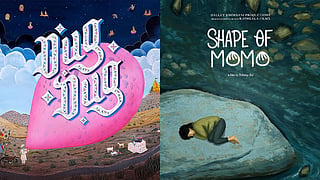

From Ritwik Pareek’s ‘Dug Dug’ and Tribeny Rai’s ‘Shape Of Momo’ to ‘The Last Tenant’ and Srimoyee Chakraborty’s ‘Sisters of the Wildflower’, Homegrown’s May watchlist explores how Indian independent cinema is tackling faith, patriarchy, queer identity, and marginalisation through cinema.
Indian independent cinema is increasingly turning its gaze toward the margins to examine the emotional, political, and spiritual realities that shape Indian life outside the mainstream. Across regions and languages, a new generation of filmmakers is telling stories about communities often overlooked or generalised into stereotypes in mainstream films: from tribal women fighting for dignity and economic autonomy, and queer individuals carving out space within deeply conservative worlds, to rural communities navigating the machinery of organised faith, and women resisting inherited systems of patriarchy.
Whether through satire, documentary, psychological drama, or social realism, these films interrogate the structures — of capitalism, caste, religion, gender, and state neglect — that shape how people live and dream in contemporary India. From a haunted moped transformed into a deity in rural Rajasthan to a Himalayan village where the shape of a momo becomes a metaphor for impossible expectations placed on women, these films reveal how belief, identity, and resistance are negotiated in deeply personal ways. They offer a portrait of an India rarely seen in commercial cinema: fractured, searching, resilient, and profoundly human.
Set in rural Rajasthan, Ritwik Pareek’s ‘Dug Dug’ follows the strange aftermath of a drunk villager’s death when his moped mysteriously returns to the site of the accident every night. What begins as superstition soon transforms into a full-fledged cult around the vehicle, with villagers worshipping the moped as a divine force capable of granting wishes. As priests, politicians, royals, and devotees profit from and amplify the phenomenon, Ritwik Pareek’s film becomes a sharp satire of how faith is manufactured, commercialised, and weaponised under late capitalism. Shot in vivid neon hues by cinematographer Aditya S. Kumar, the film satirises the systems that exploit desperation and spirituality in India. Beneath its absurd premise lies a poignant reflection on why marginalised communities turn to miracles when institutions fail them, and how easily hope can become an industry.
‘Shape of Momo’, the feature debut of Sikkimese filmmaker Tribeny Rai, follows Bishnu, a young woman who returns from Delhi to her Himalayan village and confronts the patriarchal expectations shaping the lives of the women around her. Living alongside her grandmother, mother, and pregnant sister, Bishnu begins questioning the silent endurance expected of women across generations. Using the shape of a momo as a metaphor for impossible social standards, the film explores family, gender, and resistance within a community bound by tradition. Set against the striking yet oppressive Himalayan landscape, the drama captures both the warmth between women and the emotional complexity of trying to change deeply rooted social norms. ‘Shape of Momo’ releases theatrically across India and Nepal on May 29.
‘The Last Tenant’ is a long-lost Indian film starring the late Irrfan Khan and Vidya Balan, which was unexpectedly released on YouTube on April 29, 2026, as a tribute to Khan. Shot originally in 2000, the 43-minute film marks the only on-screen collaboration between the two actors. Because the project remained unreleased for decades after its original footage was lost, the makers had given up hope until director Sarthak Dasgupta recently recovered a VHS copy. The recovered film was subsequently restored and published on the The Salt Inc YouTube Channel on April 29, the anniversary of Irrfan Khan’s untimely death. Watch the film here.
Srimoyee Chakraborty’s ‘Sisters of the Wildflower’ follows two tribal sisters from central India who run the country’s first legal mahua distillery. Rooted in the centuries-old tradition of brewing mahua — a sacred tribal liquor often stigmatized and overlooked — the documentary explores their fight for recognition, dignity, and self-determination. While the elder sister dreams of turning their local brew into a globally celebrated brand, the younger sibling embarks on a deeply personal journey of gender transition in a society hostile to queer identities. Through their intertwined struggles, the film becomes a powerful portrait of indigenous resilience, queer identity, and the courage to imagine a life beyond the limitations imposed by caste, gender, and marginalization. Follow @spiritofthewildflowerfilm to learn more.
If you enjoyed reading this, here’s more from Homegrown:
Panchsheel Gaikwad’s Film Shows Us What Caste Steals From Love, Intimacy, & Selfhood
‘When The Sun Goes Down’ Explores Love, Ambition, & Growing Up As Young South Asians
Mehar Malhotra’s Cannes-Selected Short Examines The Scarcity Of Rest Under Capitalism
