
- HOMEGROWN WORLD
- HGCREATORS
- HGEXPLORE
- HGVOICES
- HGSHOP
- CAREERS
- ABOUT US
- CONTACT US

25 years into the 21st century, it is undeniable now that we are going through a period of transition across the world. Recent geopolitical upheavals — from American transgression against a democratically elected government in Venezuela, massive protests and counter-protests in Iran, and ongoing atrocities in Ukraine and Palestine — are all signs of a deep rot at the inner rind of our world. We are all angry, and we are all tired, all the time. We are all nostalgic for a return to the good old days of the early 2000s, when the world seemed to be heading in a different direction. Who would have thought we’d be here now? Certainly not Paul Rudd.
Believe it or not, this is not the first time this has happened or will happen in human history. Above all and after all, the history of human civilisation is the story of cycles: of rise and fall, of progress and regress, of development and decline. The way we now look back at the late-1990s and early-2000s as a golden era of unprecedented liberalisation — both social and economic — and technological progress, the writers and artists of the inter-war years in Europe and America looked to La Belle Epoque: a prosperous, more hopeful period in French and European history from the end of the Franco-Prussian War in 1871 to the start of World War I in 1914, characterized by peace, innovation, cultural growth, and luxurious lifestyles, especially in Paris, despite underlying social tensions — sharply contrasting with the coming war and its aftermath. Except, the framing of this period as a golden age was a largely retrospective exercise undertaken by the French intelligentsia, fuelled by nostalgia for the world before the World War as they reeled from the devastation caused by the Great War.
Our current cultural zeitgeist is not too different from the inter-war period. But while the world appears to be heading toward another crisis, Indian creators are meeting the moment with groundbreaking projects. From a radical reimagining of what a modern Indian cultural festival could be to a land art installation in the Himalayas, a music video addressing the politics of language, power, and consent, and Kolkata restaurants subverting the city’s appetite for nostalgia, here’s what we have for you this week:
‘Infinity in a Box’, a land art installation by interdisciplinary artists Ikshit Pande and Jasmeet Kaur, explores the complex relationship between climate change, overtourism, and the stunning beauty of the Himalayas. The land-textile installation focuses on the intersection of hyperconsumerism, the capacity of communities, and the geography of the majestic mountains that hold everything together. The project highlights co-creation and community involvement. Built on-site over a week, Pande and Kaur invited local communities and visitors to contribute materials and participate in the creation process, encouraging a collective expression of concern and creativity. Disha spoke with Ikshit and Jasmeet earlier this month. Read the interview here.
On January 7, UP Warriorz — a Uttar Pradesh-based IWPL franchise — unveiled its new playing jersey in Mumbai, designed in collaboration with Ekaya Banaras, India’s first luxury handloom brand. This marks Ekaya’s first engagement with women’s cricket apparel, becoming the team’s official design partner. Titled ‘A Blooming Rebellion’, the jersey features floral motifs common in Banarasi textiles, reflecting the region’s weaving history and ideas of continuity and renewal. These references have been adapted for a contemporary, performance-focused sporting design. The collaboration positions the jersey as a marker of aspiration, regional pride, and women shaping narratives both on and off the field, Disha writes here.
What do you think of when you think of Kolkata’s food and drinks scene?
For decades, the answer was shaped by nostalgia, with legacy institutions like Trincas, Flurys, Peter Cat, Aminia, and Oly Pub defining the city’s culinary identity. These spots influenced how people ate and connected over shared tables. But focusing only on nostalgia misses the current shift. Over the last decade, a change has been happening, driven by more travelled and curious diners who are less satisfied with familiar flavours. These five new(er) restaurants don’t aim to replace the old but are redefining dining in Kolkata. Learn more here.
There is a certain unspoken violence in how harm is often softened by language. Singer-songwriter Karshni Nair’s ‘Malapropism’, the penultimate track from her upcoming album 'Buck Wild' (releasing 28 January 2026), is built around this slippage: the moment where language fails morality, and women are left to carry the weight of that failure within their bodies. It is co-produced by musician and visual artist Shoumik Biswas aka Disco Puppet. The music video for Malapropism — directed and edited by Karshni herself — does not attempt to illustrate the song so much as argue with it, complicate it, and push its narrative further. Learn more about the music video here.
This year, on January 16, The Gathering — a food festival unlike any other — returns for its second edition. Taking place over three days at the historic Mukesh Mills in Mumbai, Edition 02 will turn the mills into a hub for taste, ideas, and art. Throughout the event, India’s most creative chefs, artists, and thought leaders will unite to craft a new expression of modern India, expressed through singular flavours, forms, textures, and sensations. Learn more about The Gathering Edition 02 here.
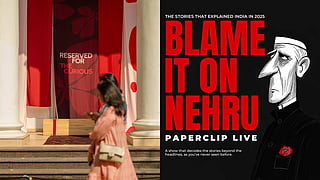
‘Blame It On Nehru’ is a live storytelling show by Paperclip — a media platform known for its original storytelling — that unpacks India’s politics, democracy, and news headlines through intriguing history, delightful anecdotes, and deeply human stories. Rooted in research and curiosity, the show aims to inform, engage, and entertain while capturing India in all its diversity. Each story follows a headline into deeper global, historical, and human detours brought together through visual cues, audience interaction, and Paperclip’s signature narrative style.
If you enjoyed reading this, here’s more from Homegrown:
How BLR Hubba Is Turning Bengaluru Into A Living Cultural Map
A City In Conversation: Homegrown Guide To The 6th Kochi Muziris Biennale
From Pongal To Tilgul: A Journey Through India’s Harvest Festival Foods
