
- HOMEGROWN WORLD
- HGCREATORS
- HGEXPLORE
- HGVOICES
- HGSHOP
- CAREERS
- ABOUT US
- CONTACT US

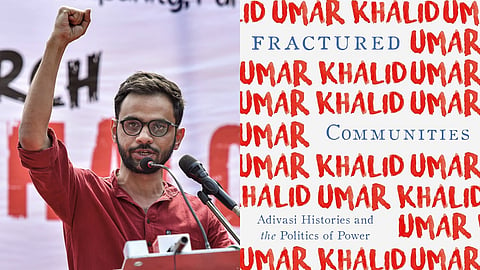
The publication of Umar Khalid’s ‘Fractured Communities’ brings one of India’s most acclaimed doctoral theses to a wider audience. But the book’s release also highlights the continued incarceration of its author, who has spent years in prison without trial, sparking debate about democratic dissent, constitutional rights, and justice in contemporary India.
Umar Khalid completed his PhD thesis on the history of the Adivasi tribes of the Singhbhum region of Jharkhand under extraordinary circumstances. He faced sedition charges, spent time in jail, and was rusticated from his university. The thesis was submitted to Jawaharlal Nehru University’s Centre for Historical Studies in July 2018. Since then, it has attracted significant attention from Indian scholars and historians. Historian Ramachandra Guha called it “...one of the most accomplished doctoral dissertations by an Indian that I have read”, while Nandini Sundar described it as a “deeply insightful” work by a “brilliant mind”. All the while, Khalid himself has remained incarcerated as a pre-trial detainee for over 6 years in Delhi’s Tihar Jail in a searing indictment of India’s much-vaunted higher judiciary.
Khalid’s thesis, ‘Fractured Communities’, published in book form for the first time by Juggernaut Books this month, combines his archival rigour with analytical clarity to illuminate the history of Singhbhum’s tribal societies under British rule. The book is both a valuable work of history and a critique of histories written from positions of power, which tend to “flatten differences among and, more crucially, within communities.”
Umar Khalid became a central figure in a major political controversy when he helped organise an event protesting the 2013 execution of 2001 Parliament attack convict Afzal Guru in February 2016. Since then, he has helped build campaigns against hate crimes targeting Muslims and become an important voice in the democratic protests against the communal amendments to the citizenship law. In 2020, he was arrested under India’s stringent Unlawful Activities (Prevention) Act or UAPA in connection with the Delhi riots case and remains in jail without trial. His incarceration has raised questions about the limits of democratic dissent in India today.
Khalid’s continued pre-trial detention has also raised uncomfortable questions about India’s judicial institutions. Critics argue that repeated bail denials and extraordinary delays in bringing the case to trial constitute a failure to uphold the constitutional commitment to personal liberty and to justice without delay. Whether or not one shares that assessment, the fact remains that an acclaimed scholar has spent years behind bars without a verdict. The publication of ‘Fractured Communities’ stands as a reminder that intellectual life can survive even under conditions of repression. It is both a work of scholarship and a testament to the enduring relationship between knowledge, dissent, and democratic freedom.
‘Fractured Communities’ is currently available for free on Kindle until June 27, offering readers an opportunity to engage with a remarkable work of history and to reflect on the circumstances under which it was written and published. Get your copy here.
