
- HOMEGROWN WORLD
- HGCREATORS
- HGEXPLORE
- HGVOICES
- HGSHOP
- CAREERS
- ABOUT US
- CONTACT US
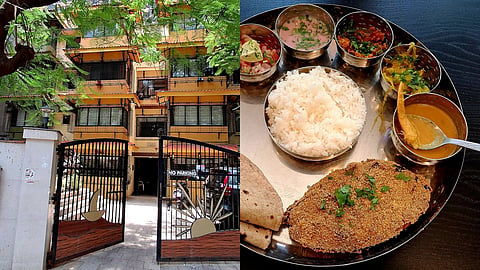
Housed within a government guesthouse in Juhu, Goa Bhavan's modest canteen serves seafood thalis, fried fish and familiar Goan preparations, carrying a slice of the coastal state's food culture into a city that has long shared a relationship with it.
Mumbai and Goa have shared a relationship that extends well beyond the weekend crowds making their way down the Konkan coast. Generations of Goans have made Mumbai home, bringing with them their food, traditions, music and ways of gathering around a table. Across the city, this relationship has found expression in neighbourhood restaurants, bakeries, family-run eateries and the many establishments serving the food of India's western coastline. In Juhu, one such address occupies an unusual setting: a government guesthouse called Goa Bhavan, where a small canteen has been serving up Goan-style meals to anyone who knows where to find it.
Located along Gulmohar Cross Road in the JVPD Scheme, Goa Bhavan serves as the Goa government's guesthouse in Mumbai, accommodating government officials and other visitors travelling to the city. On its ground floor, alongside the guesthouse's administrative office, sits a modest dining room that has built a following among people seeking seafood and home-style coastal cooking. The canteen, now referred to as Goa Ruchik in recent visitor accounts, occupies a former residential flat within the building. The arrangement gives the place an interesting identity, with a government guesthouse doubling as a neighbourhood food stop for diners who may have no other reason to visit the building.
The canteen has been around for years, with its reputation travelling through restaurant guides, word-of-mouth recommendations and the occasional enthusiastic food blog. Its setting has long been part of its appeal. Earlier accounts describe a small dining room with a handful of tables, where sharing a table with strangers was sometimes part of the lunch-hour arrangement. Following repair and renovation work at Goa Bhavan in August 2024, the building received an upgrade, with recent visitor accounts describing an air-conditioned canteen that retains its compact format. The dining room reportedly has four tables, making it an intimate affair, especially during busy meal hours.
The menu follows a familiar coastal vocabulary, with seafood taking centre stage. Fish, prawns, chicken and vegetarian thalis make up the main offering, while individual fried seafood preparations add to the selection. Surmai, bombil, prawns, mandeli, squid and other seasonal catches have featured in accounts of the canteen, with the availability of certain dishes depending on the day's menu. For diners who enjoy a little variety on their plate, the thalis bring together several components of a coastal meal without requiring them to make too many decisions.
A typical seafood thali brings together rice, chapati, fish curry, a fried seafood preparation, vegetables, salad, pickle and sol kadhi. Some accounts also mention koshimbir and dry prawn kismoor, adding further accompaniments to the spread. The appeal lies in the combination of curry, rice and fried fish, with each component doing its own bit of work. Among the dishes that have earned the canteen a following is its rawa-fried bombil. Bombay duck, despite its name, is a fish closely associated with the Konkan coastline, and its delicate flesh lends itself well to frying. Earlier Homegrown coverage singled out the preparation for its crisp rawa coating and tender centre. Surmai fry and prawn fry have also featured among popular orders, while sol kadhi provides the familiar kokum-and-coconut accompaniment to a seafood-heavy meal.
Goan cuisine carries a history of exchange within its kitchens. Its food draws from the state's coastline, local produce, indigenous cooking traditions and centuries of Portuguese influence, with coconut, kokum, rice, seafood and spices occupying important places in regional preparations. The food varies considerably across communities and districts, from seafood curries and fried fish associated with coastal households to vinegar-laced preparations, breads and meat dishes that have become familiar markers of Goan cooking. Much of this culinary knowledge has travelled with Goans who have settled elsewhere, allowing regional recipes and eating habits to find new audiences across the country.
Mumbai, in particular, has a long association with Goan migration. Work, education and family ties have brought generations of Goans to the city, contributing to its neighbourhoods, cultural institutions and food businesses. The relationship can be traced through the city's bakeries, Catholic community kitchens, restaurants and the many small eateries serving food that carries associations with the Konkan coast. Goa Bhavan adds another layer to this relationship, with its canteen bringing regional cooking into a building that already serves as a point of contact between the state and its residents visiting Mumbai.
There is something interesting about the idea of a government guesthouse becoming a food destination in its own right. State bhavans across Indian cities have traditionally served as accommodation and administrative spaces for people travelling from their respective states, but their canteens can also become informal introductions to regional food cultures. They offer visitors a familiar meal away from home, while giving others an opportunity to encounter cuisines that may not always receive the same attention as the city's more established restaurant offerings. In Goa Bhavan's case, the canteen has developed a following through a menu that places seafood and everyday coastal preparations at the centre of the experience.
For a city with as many regional food traditions passing through it as Mumbai, establishments like these are worth knowing about. They offer a glimpse into the ways food travels with people, finds a place in new neighbourhoods and becomes part of another city's culinary vocabulary. At Goa Bhavan, that connection takes the form of a fish thali, a plate of rawa-fried bombil and a glass of sol kadhi, served in a small canteen inside a government guesthouse in Juhu. A little piece of Goa, as it turns out, can be found in some unexpected corners of Mumbai.
If you enjoyed reading this, here's more from Homegrown:
From Goa To Mexico, Las Hermanas Is Putting The Tastes Of Two Coasts Into Their Tacos
Photoseries ‘Steel Life’ Is An Intimate Portrait Of A Great Grandmother's Daily Routine
Not Your Grandpa’s Calcutta: Ten Kolkata Bars & Restaurants On Our Radar This Festive Season