
- HOMEGROWN WORLD
- HGCREATORS
- HGEXPLORE
- HGVOICES
- HGSHOP
- CAREERS
- ABOUT US
- CONTACT US
The India AI Film Awards (IAIFA), set to take place on May 31, 2026, in Mumbai, marks a significant moment for the country’s emerging AI filmmaking community. Positioned as India’s first dedicated platform at the intersection of AI and cinema, the event seeks to bring together creators who have largely been working in isolation. By introducing structured categories such as narrative shorts, experimental films, documentaries, and world-building, IAIFA frames AI filmmaking as a serious creative discipline. A key emphasis on transparency encourages participants to disclose how AI is used in their work, highlighting process alongside outcome.
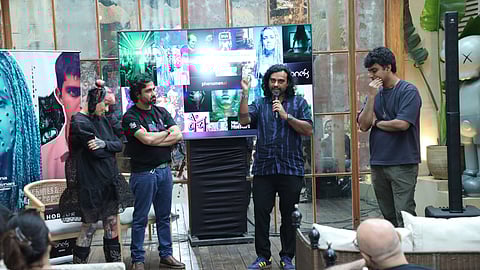
Set to take place on May 31, 2026, in Mumbai at antiSOCIAL, Lower Parel, Indian AI Films Awards (IAIFA), is positioned as India’s first dedicated platform celebrating the intersection of AI and cinema. Hosted by, BombayHubforAi (BHAI) the event is an attempt to formalise a practice that has, until now, largely existed in fragments, in private experiments, and within niche creative circles.
At the heart of IAIFA is a clear stance: the question of legitimacy is no longer the point of contention. For the filmmakers already working with AI, that debate is settled. What remains missing is visibility and a community. The awards aim to function as that connective tissue, bringing together practitioners under a shared understanding of craft.
This becomes evident in how the festival is structured. Through defined categories like narrative shorts, experimental films, documentaries, and world-building, IAIFA suggests that AI filmmaking should be held to the same standards of rigour, storytelling, and form as any other cinematic practice.
Participating films are expected to disclose how AI was used in their creation, foregrounding process as much as outcome. This insistence on openness reframes AI as a collaborator and a tool that expands authorship, instead of viewing it as a replacement.
The jury reflects this interdisciplinary approach, bringing together voices from film, tech, and internet culture. Names like Shakun Batra, Hridaye Nagpal, Priyarth Mukherjee, Prateek Arora, and Aashay Singh, signal a convergence of perspectives, each shaped by different relationships to storytelling and technology.
Yet, what IAIFA seems most invested in is to set into motion the understanding that creative disciplines are solidified through shared recognition. When practitioners gather publicly and when their work is seen within a broader field, the practice begins to take shape. IAIFA attempts to create the conditions necessary for a discipline to exist through a community and space that sustains it. Because without that structure, even the most compelling work risks remaining peripheral.
You can get your tickets for the event here.
If you enjoyed reading this, here's more from Homegrown:
We Spoke To 5 Artists About Generative AI's Place In The Indian Creative Landscape
BHAI's Debut Session In Mumbai Will Explore AI Futures Through A Horror & Sci-Fi Lens
An Indian Engineer Has Developed An AI Homework Machine That Mimics Your Handwriting
