
- HOMEGROWN WORLD
- HGCREATORS
- HGEXPLORE
- HGVOICES
- HGSHOP
- CAREERS
- ABOUT US
- CONTACT US

This article examines the rise of the Malligavad Foundation, founded by conservationist Anand Malligavad, and its influence on lake restoration across Bengaluru and India. It outlines the foundation’s low-tech, ecology-first method — desilting, earthen bunds, floating wetlands, native planting and basin zoning — which stands in contrast to the concrete-heavy engineering models commonly used in city projects.
In the last few years, the Malligavad Foundation has emerged as one of India’s most visible grassroots players in lake restoration, pursuing a low-technology, ecology-first approach to revive dying waterbodies around Bengaluru and beyond. Founded in 2019 and led by mechanical engineer-turned-conservationist Anand Malligavad, the foundation’s stated vision has been to rejuvenate public lakes 'as naturally as possible,' creating self-sustaining ecosystems that recharge groundwater, support biodiversity and serve local communities.
Malligavad’s method rejects heavy civil works and large-scale sewage diversion as default fixes. Instead his teams use desilting to restore basin capacity, build earthen bunds from excavated soil, create floating and planted wetlands to biologically treat incoming effluent, and zone lakes so a portion collects clean rainwater while another functions as a natural treatment wetland. The goal is an ecology that can endure without continual mechanical intervention. The foundation frames this as a systems problem — reconnect streams, respect topography and restore native vegetation to rebuild the lake-landscape.
Some of the projects the foundation cites include the restoration of Mylasandra Lake (about 15 acres), where capacity was reportedly raised from roughly 12 crore litres to about 25 crore litres and thousands of native trees were planted, and the Margondanahalli in Electronics City which was restored using floating wetlands and community labour to transform stagnant, sludge-filled water into a healthier wetland. The foundation has worked on many such lakes across Karnataka and other states. Corporate CSR partnerships — with groups such as JSW Foundation and Salesforce who have helped fund these interventions.
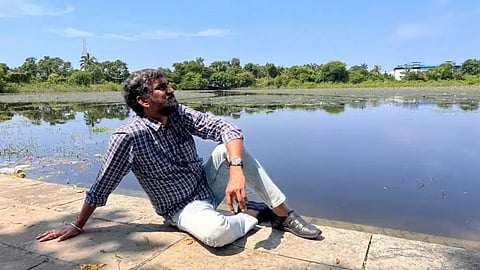
Anand Malligavad’s personal story has helped the foundation’s profile. A former CSR head and engineer, Malligavad is frequently described as 'the Lake Man,' credited with spearheading scores of restorations and winning recognition for his work. Independent profiles and interviews place his cumulative work in the hundreds of acres and multiple dozens of lakes across several Indian states — figures that highlight both the scale and ambition of the effort.
The Foundation’s work also reached international audiences when Bloomberg’s climate-optimism series An Optimist’s Guide to the Planet, hosted by Nikolaj Coster-Waldau, visited one of the restored lakes and featured Malligavad’s approach. The segment presented the project as an example of small-scale, people-driven solutions to wider water crises and brought wider attention to the foundation’s model.
The Malligavad Foundation apart is rooted its insistence that lake work is ecological and social at once: the technical fixes are paired with tree plantation drives, community mobilisation and corporate partnerships to fund work at neighbourhood scale. Whether that model can be consistently scaled without careful local governance remains an open question — but for now the foundation’s record provides a working template for reviving urban lakes without relying on the concrete-heavy methods that most city restorations use.
