
- HOMEGROWN WORLD
- HGCREATORS
- HGEXPLORE
- HGVOICES
- HGSHOP
- CAREERS
- ABOUT US
- CONTACT US
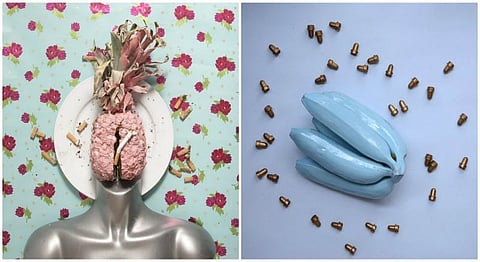
Grapes grown through electricity. A corn cob sprouts needles. Bananas turn a toxic looking pale blue. All this is ready to eat. This is the dystopia of the photo series Food Barbie. These visuals might seem absurd when you compare it to the Instagram food porn you are used to, but a closer look and they become indicative of a future where science and technology will have adulterated our food beyond recognition.

“Coming from a vegetarian north Indian family, I was always reminded of how important fresh fruits and vegetables are for me. So imagine my concern when one day I find the apple I am about to bite into is coated with wax. This is where my journey with ‘Food Barbie’ began,” says the 25-year-old fine arts photo artist of the series; Snehal Kanodia. “The more I read about the genetics of food and post produce practices, the more suspicious I became about the meal on my table.”
From realising that inorganic carrots are dipped in urea to the fact that her rose pineapples may contain genetic material from tobacco Food Barbie became a combination of the artist’s reaction and imagination about what she would be consuming in the future. “The manual painting and alteration for me was equivalent to genetic alterations done in laboratories,” says Kanodia who best expresses herself through images inspired by daily life.
Kanodia uses the metaphor of the the barbie doll to bring forth a rather dangerous way in which the food culture today plays on the consumer’s psyche. “When I looked at food around me they are all so pretty and plump, almost plastic. They seduced me into buying them but I wasn’t sure of what was inside.” Even her choice of colours for the photo series; serene pastels and some happy pops indicate this juxtaposition; the happiness of good looking food at the cost of causing long term health hazards.
When we are out grocery shopping the prettiest packaging, the best taste for the best price or the brand is what usually convinces us to buy the product. “GMO crops (focusing on those that aim at aesthetic alterations) and post produce malpractices exist is because consumers have now begun to purchase food based on what they see and not based on how healthy it is. We know our doctor. We know our dentist. Why shouldn’t we know our farmer?” are thoughts and questions Kanodia wants to provoke through Food Barbie. The purpose of Food Barbie is “not to scare people” but the artist’s way of asking people to be more aware about what they consume. Considering our bodies’ permanent relationship with food perhaps the sooner we ask these questions and address the answers, the sooner we can assure ourselves a truly healthy life.
Food Barbie has been showcased in a variety of places - galleries, exhibitions and pop up shows. At present it is up at ‘The Courtyard café’ in Bangalore. Currently Kanodia is working on a series that focuses on food wastage in metropolitan households and interestingly it is made entirely out food that later goes into the bin and is influenced by food paintings from the Renaissance.
Food Barbie and more of the artist’s work can be viewed here.
We suggest you read:
