
- HOMEGROWN WORLD
- HGCREATORS
- HGEXPLORE
- HGVOICES
- HGSHOP
- CAREERS
- ABOUT US
- CONTACT US

The article looks at 'i see myself in you / ਤੁਹਾਡੇ ਵਿੱਚ ਮੇਰਾ ਅਕਸ,' a documentary set in Brampton by Amreen Kullar, which follows three members of the Punjabi diaspora to explore what it means to build a sense of home in an immigrant city. Through conversations with its residents, the film examines belonging, cultural continuity, and the tensions within immigration discourse.
Brampton, in Canada, has one of the largest Punjabi populations outside India. Over the years, it has become a place where you hear Punjabi as often as English, where gurdwaras, sweet shops, and local businesses have shaped the everyday rhythm of the city. For many, it feels familiar in a way that most immigrant spaces try to be — a place where you can hold on to where you come from while figuring out where you are.
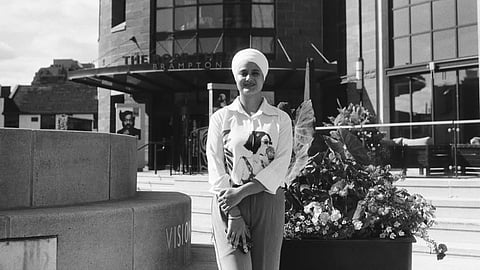
I see myself in you / ਤੁਹਾਡੇ ਵਿੱਚ ਮੇਰਾ ਅਕਸ gives us a glimpse into this world. The film looks at Brampton through the lives of three people: Prabhmeet, an international student at York University; Manpreet, a second-generation Punjabi woman who moved from Montreal; and Simran, a newly married woman who has just arrived from Jammu. Through them, the filmmaker tries to get a sense of the place and the people who live here, especially the Punjabi diaspora community.
The film is built through conversations and small moments from their lives. It focuses on what it feels like to be an immigrant, how people settle in, and how they slowly find a sense of home. There’s a tenderness in the way these experiences come through — navigating a new place, building routines, finding people, and holding on to what feels familiar. Visually, it leans into a black-and-white style with grainy textures and the analogue flicker you see in old TVs. It gives the film a worn, lived-in feeling, like something temporal held together through fragments.
At the same time, it also touches on the reality of how immigrants are seen. There are two sides within the immigration discourse — people who claim they belong to a place because they’ve been there longer, while others are treated as outsiders because they are new, look different, or carry a different culture. The film highlights how people forget that almost everyone in Canada came from somewhere else, except for Indigenous communities. That idea runs through the documentary, even in its title. ‘I see myself in you’ points to how the difference between people is often just about time — someone arrived in the country earlier, others came later.
The film also captures how the Punjabi community in Brampton has built a kind of village for itself — a mini India in many ways. Immigrants everywhere try to preserve their culture, food, language, and identity when they leave home. The film shows Brampton as a similar space that gives its inhabitants a community to belong to. In all its negotiations with identity and an appeal to the very human quest for connection, it works as a tender portrait of immigrants — of people trying to belong, and of the small ways they already do.
Follow Amreen here.
