
- HOMEGROWN WORLD
- HGCREATORS
- HGEXPLORE
- HGVOICES
- HGSHOP
- CAREERS
- ABOUT US
- CONTACT US

The article centres on 'Riders of the Well of Death', a 15-minute documentary by Barcelona-based filmmaker Erik Morales about India’s ‘Maut ka kuan’ performers. It briefly introduces the dangerous fairground stunt where riders race motorcycles and cars along vertical wooden walls, then focuses on how the film captures the lives of the riders themselves. The documentary looks at their daily routines, financial uncertainty, physical strain, travel between fairs, and the reality that this high-risk performance is their livelihood.
There’s a strange pull in every human mind toward risk. French thinkers call this l’appel du vide — the “call of the void.” It is not a wish to die but a sudden awareness of danger. You stand at a ledge, and for a moment, your brain flashes that you could step forward, even as your feet stay planted. Psychologists say this flicker is a way the mind tests fear, doubt, and choice against the backdrop of danger. People learn to live with it, ignore it, or, in rare cases, seek it out. There is something in that knee-jerk check of risk that says we notice life most when we sense how close death can be.
The sport known as ‘Maut ka kuan’ or ‘The Well of Death’ is one place where those instincts get turned into work. In parts of rural India, large wooden cylinders are built for fairs. Young men ride motorcycles or small cars around the inside walls so fast that centrifugal force keeps the vehicle stuck to the vertical surface. People stand on a platform circling the top and lean over to watch. The act is old, dangerous, and rare now because of the risk and declining crowds.
In 2016, Barcelona-based filmmaker Erik Morales came to northern India to film these riders. His short documentary 'Riders of the Well of Death' runs about 15 minutes and has since screened on platforms like Nowness and been featured by National Geographic. It also won the Best Documentary Short at the Raindance Film Festival in 2017.
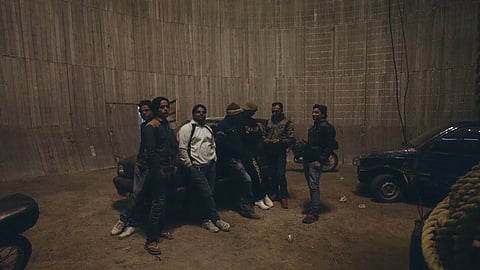
Morales wasn’t interested in making a stunt reel. However exciting the well of death may be, he wanted to know the people who choose it every day. In the documentary, the filmmaker talks to the performers who have been in this job since they were fairly young and plan to do this till they die. We’re taken behind the curtain of this thrilling lifestyle and into the quieter moments that make up most of their lives when they’re not in the limelight. It shows how much of the job isn’t action at all: the travel between fairs, the uncertainty of small crowds, the wear on their bodies, and the way they patch their machines by hand.
Riders of the Well of Death offers a glimpse outside of the daredevil fantasy that surrounds the performers. The act itself has always been treated as an attraction — something loud, thrilling, almost cinematic in itself. It draws crowds. It has shown up in music videos. It has been packaged as a symbol of raw nerve and living life on the edge. There is real power in it. Real skill. Real courage. But the documentary sits with the fact that this is how they feed their families. That their bodies absorb the cost of the danger. And that the glamour people project onto the well doesn’t necessarily reflect the lives of its riders. In the most tender lens ever granted to this death-defying routine, the film changes how we look at the ride — not from the railing at the top, but from inside the drum.
Follow Erik here and watch the documentary below:
If you enjoyed reading this, here's more from Homegrown:
Tasha Marikkar’s ‘Jayaflava’ Brings Sri Lanka’s Plural Identity To Indian Screens
Arundhati Roy’s Berlinale Withdrawal Exposes The Contradiction Of ‘Apolitical Filmmaking’
The Living Legacy Of Madhabi Mukherjee, Satyajit Ray’s Most Complex Heroine
