
- HOMEGROWN WORLD
- HGCREATORS
- HGEXPLORE
- HGVOICES
- HGSHOP
- CAREERS
- ABOUT US
- CONTACT US

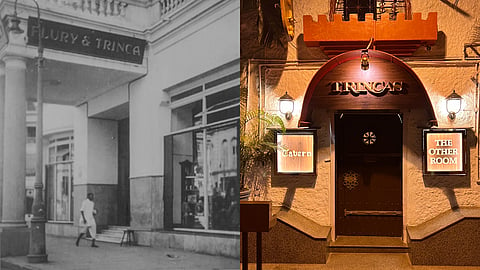
Trincas, the iconic Park Street restaurant, has been at the heart of Kolkata’s nightlife since the 1950s. Emerging during the city’s post-Independence cultural boom, it became a hub for continental dining, jazz, and live music performances. The venue launched the careers of legendary performers, including singer Usha Uthup, and bolstered Kolkata’s reputation as India’s cultural capital. Through political upheavals, cultural shifts, and changing entertainment trends, Trincas has endured — reinventing itself while preserving its vintage charm. Today, it stands as a living archive of Kolkata’s modern cultural history, celebrating decades of music, memory, and the city’s unmistakable spirit.
If you step outside Park Street metro and turn right at the four-way crossing in front of The Asiatic Society, then walk towards the unmissable porch of the Park Hotel, you’ll find the storied 'Trincas Restaurant & Bar' — one of Kolkata’s longest-running live-music venues.
The story of Trincas began almost a hundred year ago, when a Swiss expatriate named Quinto Cinzio Trinca partnered with his compatriots Joseph Flury and his wife Freida in 1927 to open a Swiss confectionary and tea room in Park Street, one of Kolkata’s most famous thoroughfares and a cultural, commercial, and nightlife hotspot that has shaped the city’s modern identity since the turn of the 20th century. The business thrived until 1939, when the partnership split and the Trincas — Quinto and his wife Lilly — opened Trincas Tea Room and Confectionery at its current location on 17 Park Street, diagonally across the Flurys. The Trincas would run the tea room until 1959, when they sold the business to Omi Puri and his partner Ellis Joshua and returned to Switzerland.
A former manager at the Grand Hotel — currently, the Oberoi Grand — and a close friend of the Puri family, Joshua helped transform the Trincas tea room into the throbbing heart of Park Street’s bustling nightlife in the 1960s. Alongside its contemporaries like Mocambo and Magnolia, Trincas shaped Part Streer’s reputation as the epicentre of Kolkata’s continental food scene, jazz culture, and late-night glamour. The restaurant soon became known for its live performances, embracing the Sixties’ rebellious, counter-cultural spirit, then spreading across the world.
Trincas was the place to be in Sixties and Seventies Kolkata. From college students to diplomats, and film stars to industrialists, you’d find people from all walks of life at Trincas. The restaurant played a crucial role in Kolkata’s evolution into a live-music hotspot in the latter half of the 20th century and supported a new generation of performers, especially women, who would become icons of the cabaret and nightclubs. Before she became a national sensation for her deep contralto voice, Usha Uthup first cut her teeth in the live music scene at Trincas. She also met her husband, Jani Chacko Uthup, at the restaurant. Trincas became a symbol of Kolkata’s permissive, hybrid modernity during a period of intense political upheavals in India.
Throughout the Seventies and Eighties, Trincas continued to host both iconic and underrated voices of independent music through political upheavals, cultural shifts, and changing live entertainment trends. Despite economic stagnation due to Communist-era deindustrialisation, shifting cultural tastes, and the decline of nightclub culture in the Nineties, Trinca’s survived thanks to its loyal clientele and a growing nostalgia for “Old Calcutta".
By the 2010s, the restaurant embraced yet another transformation. The lively days of cabaret, burlesque, and nightclubs faded into evenings filled with acoustic melodies, jazz riffs, retro celebrations, and the fresh energy of up-and-coming local performers. In 2022, the Tavern behind Trincas, once a humble laundry room and now a snug retreat echoing the charm of a medieval English tavern, was reimagined for its 50th anniversary. It quickly became one of the city’s most enchanting spots for music, cocktails, and a taste of nostalgia.
“Trincas has a century worth of history. Much of it is fragmented and lost to time, but the urban history of Calcutta itself is wrapped around Trincas’ story,” Anand Puri, Omi Puri’s grandson and the current proprietor, says. “I’ve been discovering nuggets from the past — about the way things were, trends, food, and entertainment. A lot of the past is still relevant today and can be learned from (…) like turning Sunday afternoons into something special — Musical Jam Sessions in the 1960s versus Jazz Revivals in the 2020s. It’s been an incredible journey uncovering the legacy and learning from it.”
Today, Trincas stands as a cornerstone of Kolkata’s rich cultural history, where the city’s vibrant past meets its revitalised present. Its true significance lies in its enduring role as a vibrant archive of the city’s nightlife, shifting gender performances, and leisure culture.
Follow @trincasrestaurant on Instagram.
Learn more about Trincas here.
If you enjoyed reading this, here’s more from Homegrown:
Explore The Golden Age Of Kolkata Indie Rock With Legendary Drummer Nondon Bagchi
Homegrown Embedded: How Dindūn Is Shaping A Brave New South Asian Synth-Folk Sound
Tavern Behind Trincas Is Leading The Charge For A Bengali Music Revival In Kolkata
