
- HOMEGROWN WORLD
- HGCREATORS
- HGEXPLORE
- HGVOICES
- HGSHOP
- CAREERS
- ABOUT US
- CONTACT US

When The Humming Tree shut down in 2019, India’s independent music ecosystem lost a cultural anchor. For six formative years, the Bengaluru space nurtured emerging artists, prioritised craft over spectacle, and reshaped how audiences encountered non-film music. Now, in 2026, The Humming Tree’s return raises a vital question: can real-world listening rooms still survive in an algorithm-and AI-driven era? THT 2.0 suggests the answer is yes.
If a tree falls in a forest and no one is around to hear it, does it make a sound?
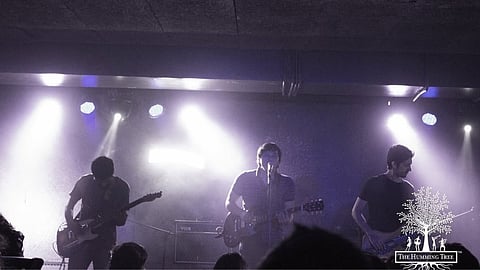
When The Humming Tree shut down in September 2019, India’s independent music movement lost one of its most nurturing platforms. For more than half a decade, the Indiranagar space founded by Nikhil Barua in 2013, had been a hotspot for Bengaluru’s independent music scene and saw the emergence of some of Indian music’s biggest names in recent years. Indian hip-hop’s breakthrough maverick Hanumankind, for example, first cut his teeth in the hip-hop scene at open-mic nights at The Humming Tree before exploding onto the scene at the NH7 Weekender in 2019.
Hanumankind wasn’t an outlier. Bengaluru-based folk-rock collective The Raghu Dixit Project and Urdu-inflected progressive rock band Parvaaz, Chennai-based funk-rock regulars Skrat, Bengaluru-based Thermal And A Quarter — one of India’s earliest anglophone indie bands — as well as singer-songwriters and experimental musicians like Susmit Sen (Indian Ocean), Tajdar Junaid (Ruuh-Baksh), Ankur Tewari, and international acts like Tinariwen, Skrillex, American experimental rock duo Battles, and American rapper and singer Anderson .Paak, and English rock band Wolf Alice, all performed on The Humming Tree’s stage at one point or another in the space’s 6-year-long first life. From early-career artists to established names, musicians and music-lovers alike found refuge underneath The Humming Tree’s welcoming canopy.
The Humming Tree emerged at an inflection point in the evolution of independent music in India. Before 2010, live performance opportunities for non-film musicians were largely confined to college fests, corporate gigs, hotel lounges, and one-off city concerts. What was missing almost completely from this landscape was a stable venue programming original music regularly. The Humming Tree filled this gap just as the proliferation of affordable recording tech and social media allowed emerging and independent artists to find their audience and grow their music-making practice. While social media platforms enabled artists to cultivate loyal followers, spaces like The Humming Tree allowed young, urban audiences to experience their favourite artists’ music in alternative, more intimate spaces outside the Bollywood-dominated bars and lounges in Mumbai and New Delhi.
The venue also bolstered Bengaluru’s reputation as a hotspot for indie music in India. Unlike Delhi’s more dispersed and underground independent scene or Mumbai’s event-driven nightlife, Bengaluru always made space for repeat performances by city-based artists and bands, long-running residencies, and sustained audience growth over several performances. Long before the rise of new-age listening rooms across India, The Humming Tree became a bridge between older, anglophone jazz, funk, and blues bands and a new wave of multilingual, regionally rooted musical acts as well as experimental musicians working outside the band format.
This spatial intimacy shaped the kind of music that flourished at The Humming Tree. Between 2013 and 2019, this produced a noticeable shift in Indian indie performance culture, toward a focus on craft and skill rather than novelty. But the venue’s seemingly sudden closure in 2019 also exposed a systemic vulnerability to regulatory authority that has always plagued India’s cultural ecosystem. Noise regulations, licensing hurdles, and opaque zoning rules have always disproportionately affected smaller venues — the very spaces where independent artists grow. The Humming Tree’s closure created a noticeable vacuum in this space, forcing artists to either return to pop-up gigs or rely on algorithm-driven streaming revenue.
Now, in 2026, The Humming Tree is back in a new, purpose-built space in Indiranagar. Spread across 12,000 sq. ft., this new iteration of The Humming Tree features a performance space with a capacity of hosting more than 600 guests, high-fidelity sound and lighting systems, and a diverse selection of food and beverages. What remains unchanged, however, is its core philosophy: privileging music over sensationality, and process over hype.
The Humming Tree’s second coming augurs the return of a space where artists can grow through repetition, and audiences can encounter music without algorithmic mediation. Its return suggests that independent culture still needs physical spaces to endure, and that despite interruptions, India’s appetite for such spaces has not disappeared.
Learn more about the opening acts of The Humming Tree 2.0 here.
Follow @the_hummingtree for more information.
If you enjoyed reading this, here’s more from Homegrown:
How BLR Hubba Is Turning Bengaluru Into A Living Cultural Map
From The Team Behind Echoes Of Earth Comes An Immersive Art, Music, & Tech Festival
A City In Conversation: Homegrown Guide To The 6th Kochi Muziris Biennale
