
- HOMEGROWN WORLD
- HGCREATORS
- HGEXPLORE
- HGVOICES
- HGSHOP
- CAREERS
- ABOUT US
- CONTACT US

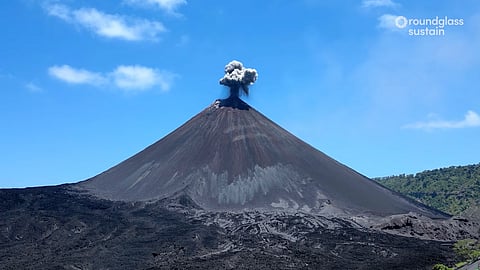
This article is about the documentary 'Barren Island: Born Of Fire' by Roundglass Sustain that explores Barren Island, the only active volcano in the Indian subcontinent, focusing on its eruptive landscape, geological history, and the resilient marine ecosystem that thrives around it; it also briefly covers where Barren Island sits within the Andaman volcanic arc, what limited forms of tourism are permitted around it, and situates the island alongside other volcanic sites in the region such as Baratang’s mud volcanoes and Narcondam Island, reframing the Andamans beyond their beach-centric image.
When people think of the Andaman Islands, the images that come to mind are fairly predictable: slow afternoons on white-sand beaches, turquoise waters at Havelock and Neil, scuba dives through coral gardens, glass-bottom boat rides, and sunsets that demand you put your phone down for once. The Andamans have long been sold as India’s idea of a tropical pause button — pristine, and gently indulgent. But beyond the beaches and dive sites, there is something far more volatile waiting out at sea.
Roughly 140 kilometres northeast of Port Blair lies Barren Island, the only active volcano in the Indian subcontinent. It doesn’t look like a typical tourist attraction, and that’s precisely the point. Rising out of the Andaman Sea like a dark, broken crown, Barren Island feels closer to a science-fiction landscape than a holiday postcard. Its slopes are etched with hardened lava flows, ash deposits, and scars from eruptions that stretch back centuries. The earliest recorded eruption dates to 1787, and after long periods of no activity, the volcano reawakened in 1991. Since then, it has erupted intermittently, reminding scientists and sailors alike that the region sits on a restless tectonic boundary.
Geographically, Barren Island belongs to the same volcanic arc that runs through Southeast Asia, formed by the slow collision of tectonic plates beneath the Bay of Bengal. The volcano is small but potent, built from layers of basaltic lava and ash that have repeatedly reshaped its surface. There are no permanent human settlements here, and landing on the island is strictly prohibited. Yet the real surprise lies just offshore. Beneath the dark cliffs and smoking vents is a thriving underwater world — coral reefs, reef fish, pelagic species, and clear waters that support one of the most resilient marine ecosystems in the region. Fire above, abundance below.
This dramatic contrast is at the heart of a visually striking documentary by Roundglass Sustain, which takes viewers on a rare cruise around Barren Island. The film captures the raw power of the volcano while paying close attention to the fragile life that has adapted around it—from corals that grow near old lava flows to seabirds that circle the island’s rim. Roundglass Sustain, known for its thoughtful work at the intersection of nature, conservation, and storytelling, frames the island as a secluded but vibrant living system shaped by extremes.
For travellers wondering whether it’s possible to see this place in real life, the answer is yes — with limits. You cannot set foot on Barren Island, but organised boat cruises do operate from Port Blair and nearby islands, depending on sea conditions and government permissions. These trips take you close enough to witness the volcano from the water, often circling the island at a safe distance. Some expeditions combine the journey with controlled scuba diving or snorkelling in surrounding waters, subject to permits and weather. The trips are long, the seas can be unpredictable, and nothing is guaranteed — but that sense of uncertainty is part of the experience.
Beyond Barren Island, the Andamans also carry quieter traces of volcanic activity. Baratang’s mud volcanoes, formed by gas and sediment pushing up from below the earth’s surface, are among the few places in India where this phenomenon can be seen on land. Narcondam Island, a volcanic outcrop farther north, remains largely closed to visitors due to its fragile ecology and its population of rare endemic species, including the Narcondam hornbill.
Seen together, these sites point to a less discussed side of the Andamans—an island chain shaped as much by tectonic movement as by tides. Visiting a volcano here shifts the experience away from leisure and toward geography, offering a clearer sense of how unstable terrain, isolation, and time have shaped the islands beyond their beach-facing image.
Follow Roundglass Sustain here & watch the documentary below:
If you enjoyed reading this, here's more from Homegrown:
Jawed Sharif's Gripping Documentary Spotlights The Plight Of Pakistan's Boat People
Saved By A Curse: This Documentary Shows Us Why The Chambal River Remains Pristine
A Homegrown Documentary Captures The Loss Of Koli Community's Connection With The Sea
