
- HOMEGROWN WORLD
- HGCREATORS
- HGEXPLORE
- HGVOICES
- HGSHOP
- CAREERS
- ABOUT US
- CONTACT US
Food is memory. It has always gone beyond that transient moment when it sits on your plate to the moment you actually taste it. And recipes are stories — stories of culture, caste, class, region, and I can honestly go on. They tell stories of families and transcend generations, carrying within them the imprints of adaptation, and survival.
They bring homes together and what your plate looks like tells a lot about who you are and where you come from. From this need to immortalise memory, Shruti Taneja founded Nivaala, a private kitchen archive that helps document people’s memories and recipes. After losing her mother she felt this urgent need to be able to restore her recipes, the focus points she remembered her by. Nivaala, which means, a bite of food in Hindi, was born out of the realisation that recipes should also be treated as tangible heirlooms, not just something we refer to while we are standing in the kitchen cluelessly wondering what to put into the kadhai first, the onion or the tomato.
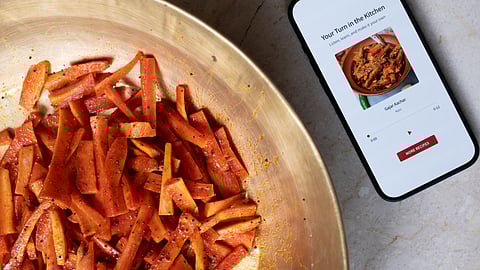
What started as an analogue ‘recipe keeper, where people could handwrite recipes like the old diaries our grandmothers once kept, eventually evolved into its digital counterpart in the form of the Nivaala app. “We realised that if you ask your mom, or anyone, for a recipe, they often struggle to give you exact measurements. It’s easier for them to talk you through it and explain everything andaaze se, because everything is cooked by instinct, especially in our country. Everything is cooked by memory. We wanted to capture the voice because voice is also something that remains,” says Shruti Taneja in conversation with Homegrown.

The Nivaala app helps families store their recipes in a private digital repository where they can record these instructions in their own voices. The app then transcribes the recordings, preserving both the spoken memory and the written method in one place. It even has family circles where you can create groups with members and share the recipe as a PDF, extending this not just as an individual memory keeper but a community based one. In doing so, it bridges the ‘kitchens of the past and the kitchens of the future’, as Taneja likes to put it.
‘We all right off ‘ghar ka khaana’ as like ‘oh it'll always be there’, we take it for granted. So when my nephew was born I realised that he also needed to taste the food I grew up eating.’
Shruti Taneja
An upcoming feature set to launch on the app will allow users to make select private recipes public. Once shared, these recipes will be pinned to a digital map, enabling others to see what their neighbourhood is cooking that day, transforming the app into a collective food atlas. You can open up the app and see who is making bisi bele bhath in the house next door for lunch or who is frying up fresh bhatures for breakfast down the street, reinforcing the emotion that food has always been and will always be deeply communal.
In a time when so much of our lives is fleeting, there is something profoundly grounding about preserving a recipe in the voice of the person who made it for you. Because food was never only about sustenance. It was about presence.
Nivaala is available to download on both iOS and Android. Learn more about Nivaala on their website here.
If you enjoyed reading this, here's more from Homegrown:
Home On A Plate: 5 Indian Chefs Talk About The Culinary Memories That Shaped Them
Cooking Up Belonging: Inside The 'Borrowed' Kitchens Of Young Indian Adults
Indian Food Writers Are Using Their Work As Tools Of Cultural Connection & Preservation
