
- HOMEGROWN WORLD
- HGCREATORS
- HGEXPLORE
- HGVOICES
- HGSHOP
- CAREERS
- ABOUT US
- CONTACT US
This piece explores The Public Place in Mumbai, a community-driven initiative that fosters open dialogue and collective learning around issues like privilege, housing, public health, and social justice. Rooted in the belief that multiple truths can coexist, the space creates opportunities for meaningful, judgement-free conversations through workshops, film screenings, book discussions, and lectures. Founded by individuals from diverse humanities backgrounds, The Public Place encourages participants to engage critically with systemic inequalities while building empathy and awareness. In an increasingly digital world, it stands as a vital “third space,” offering real, tactile community and a platform for responsible, nuanced discourse.
I recently had an extremely heated debate with a loved one about privilege. They couldn’t seem to separate their lived experience of struggle and hard work, of not being dealt the easiest hand, from the fact that, socio-culturally, they come from an extremely upper-caste, upper-class background. I think, as a society, we’ve forgotten that two things can be true at the same time: that we don’t need to exist in polarities and that our worldview does not have to be singular but can contain multitudes.
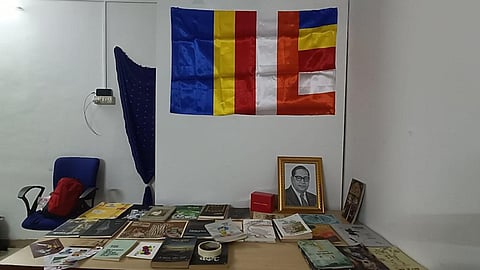
This idea has been discussed time and again, but the only way it can truly be instilled, almost enforced, is through open-minded, welcoming conversations that remove judgment from the equation. The Public Place in Mumbai is one such space, designed for collective learning and to equip people with the knowledge and awareness to become more empathetic citizens. Founded by six individuals from diverse disciplines within the humanities, from law to theatre, The Public Place aims to spark curiosity about the systemic workings of our society.
Through workshops on mental health and other pressing issues, as well as film and documentary screenings like 'Pariyerum Perumal', 'Gail & Bharat', 'Sinners', and 'Begumpura', the space takes a deeply practical approach to collective participation. They also host book discussions with regional authors and translators through their book club, alongside lectures on topics such as housing inequalities in urban centres like Mumbai. Ultimately, The Public Place seeks to foster an environment where participants can foster a sense of responsiblity for the society they help shape, one where the stories of marginalised communities are acknowledged and credited, rather than sidelined as they so often have been in our collective history.

The Public Place is located within a 15-minute walk from both Kurla and Tilak Nagar railway stations. It is a space that brings people from different walks of life together to educate, discuss, and work towards addressing social injustices in Mumbai. Its main focus areas are “housing, public health, and just livelihoods.”
The existence of third spaces for civilised thought and discussion has become more and more important in a world that is becoming increasingly polarised. There are spaces where people can build community and experience what tactile companionship feels like, almost like an antidote to the para-social and hyper-realistic online relationships we spend all day building. That kind of learning rarely happens in isolation or online, which is precesely why initiatives like the Public Place are all the more vital.
