
- HOMEGROWN WORLD
- HGCREATORS
- HGEXPLORE
- HGVOICES
- HGSHOP
- CAREERS
- ABOUT US
- CONTACT US
A personal essay exploring Coshish's 2013 progressive rock album 'Firdous', a seminal record in Indian Hindi prog-rock and metal. The piece reflects on discovering the Mumbai band during college years, the album's concept and interactive artwork, and how the physical CD experience represents a lost tactile connection to music in the digital streaming era. The article also contextualizes the album within the broader landscape of India's independent music and alternative media scene of the early 2010s.
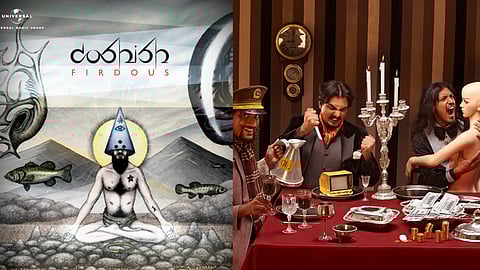
When you turn the case, the CD’s front cover artwork appears the right way up. At the centre sits a sage‑like figure, surrounded by fish and mystical symbols. Open it, and the backside artwork completes the image in one continuous vertical sweep. He is floating above a cityscape that exudes urban gloom.
You open the CD case, and the disc sits in the centre like a portal, inviting you to enter a new world, a doorway to a cathartic musical experience.
Inside sits 'Firdous', the spellbinding 2013 album by the Mumbai prog rock and metal band Coshish. It feels like a small time capsule from a moment when Indian rock and the internet briefly made space for ambitious albums. Holding this in 2026 feels like holding on to a language of listening from a different world.

Listening to the track 'Coshish' was my pre-exam ritual, alongside ‘Selkies’ and ‘Mordecai’ by progressive metalcore band Between The Buried and Me. The inspirational lyrics pushed me to fill enough pages in my answer booklet and not flunk!
They were also the first band I watched after moving to Bangalore, at The Humming Tree about a decade ago. The Humming Tree shut down not too long after, only to reopen recently, to my delight.
I still keep other analog relics around: Pineapple Express’s debut EP Uplift, Soulmate’s Shillong, even a cassette of AR Rahman's Swades. But Firdous, sits in its own category. Years later, holding the CD, I realize how much more it offers beyond the songs.
The Album Experience
Firdous is a concept album built around a protagonist who wakes up to the hollowness of ambition. Our protagonist, who could also be the listener, stumbles on a trunk of old photographs, letters, and notes in a house. They belong to someone who once chased the city dream and paid for it with grief and disillusionment.
The lyrics arrive as handwritten sheets, complete with scribbles and corrections. Behind each is a dated photograph. The card for the final instrumental, 'Mukti', reads "Follow the dates", creating an interactive narrative puzzle. It demands attention, refusing to be passive background noise.
I first stumbled onto Coshish through YouTube on Balcony TV, one of those underrated, brilliant corners of early Indian indie internet music culture. An acoustic version of 'Raastey' stripped to its essence, sent me digging deeper. Around the same time, I was falling into progressive metal through Tool, Opeth, Dream Theater, and Periphery.
When I first heard Coshish, it opened a new world for me. I loved that ‘Firdous’ was finely crafted progressive rock and metal in Hindi! Like most people, I had grown up on romantic hits and disposable earworms that cycled through radio and TV, music that often felt shallow or interchangeable. This was the opposite of that. Here was a band crafting homegrown progressive rock and metal music in an Indian language. Heavy, intricate, emotional. It brought the music I loved closer home, warmer and more relatable.
Beyond the music itself, Firdous also had some truly striking music videos like 'Maaya', 'Bhula Do Unhey', and 'Raastey'. The music itself was impressively fluid and broad, featuring a mix of technical and light rock and metal, with great arrangements with songs like ‘Woh Kho Gaye’ and the title track. It was accessible, strong in musicality, expertly balancing heaviness with melody, harmony, and an element of darkness. The perfect gateway drug to the average Hindi or Indian language listener who might have tasted diversification through films such as Rock On, Rockstar, or come across rising acts like Avial, Thaikkudam Bridge, or The Local Train.
Produced by Zorran Mendonsa, the liner notes read today like a roll call of the Mumbai rock and metal ecosystem: Sahil Makhija, Scribe, Zygnema, Goddess Gagged, Paradigm Shift, and more. Hold the CD, and you can almost feel a scene coalescing in those acknowledgements, a small but intense network of people trying to make heavy, weird, ambitious, and most importantly interesting heartfelt music.
It really did feel like a golden phase. I was at a rural college in coastal Karnataka, far from Mumbai or Bangalore, yet these bands were finding their way to us through algorithms, forums, blogs, torrents, and recommendation chains. Alongside Coshish came Indus Creed, Zero, Pentagram, older acts that felt new as I was catching up through torrent, downloads, and MP3 CDs. You found entire discographies on torrent sites, and in that slightly illicit act of downloading, there was also a sense of building your own library. It was in many ways letting art breathe and flourish.
This period also coincided with YouTube beginning to act as a serious discovery engine, at least for me. That’s how I discovered Warren Mendonsa’s Blackstratblues, the solo guitar project of the Zero guitarist, instrumental music that opened another essential world of listening. Alternative Indian media was blooming, music videos stopped sounding like film songs, web series did not look like television, and comedy sketches that actually packed a punch.
On the one hand, I realise that I am falling into that old familiar trap; everyone believes their formative years were the best time for music; for culture; for everything really. But something has genuinely shifted. That pre-TikTok, pre-Reels phase existed on a threshold between the old world and the new. Before the fifteen-second reel swallowed everything, making it difficult for art that isn't immediate or in-your-face to survive. The new media of that moment really did offer an alternative to the dated mainstream Indian music, film, and TV many of us had grown up with in Hindi, Tamil, Kannada, Malayalam, and beyond.
Now, short-form video platforms have reshaped how songs are written, heard, and discarded. A large portion of music discovery now happens through 15–30 second clips, where a catchy hook or beat drop becomes the end-all of a track instead of just one part of a larger narrative. Everything is optimised to grip a distracted thumb before it scrolls away.
And yet, maybe the antidote lies in slowness, bringing back the days of taking an hour to say anything worthwhile; of art that demands your attention long enough to tell a story that matters.
So go find an album that speaks to you the same way Firdous did to me. Get the physical copy if you can, and I suspect you'll have to dig, because that's always part of the journey. The music will ask you to sit still; to pay attention to the sequence, the artwork, the dates on the cards, and the hidden architecture of a story that only reveals itself if you pay attention and follow where it leads. Let it take its time with you. It knows what it's doing.
If you enjoyed reading this, here’s more from Homegrown:
Beedi Wars: How The Humble Beedi Sparked Decades Of Bloody Conflict In Kerala & Karnataka
Why Is A High School In Hungary Named After Dr Ambedkar?
Abbey 301: How A 200-Year-Old Chapel In Khandala Found Its Artistic Voice
