
- HOMEGROWN WORLD
- HGCREATORS
- HGEXPLORE
- HGVOICES
- HGSHOP
- CAREERS
- ABOUT US
- CONTACT US
Residents of Versova are protesting the felling of trees in Nana Nani Park for the Mumbai Coastal Road North project, highlighting the loss of a vital community space and environmental concerns.
It is particularly cruel to cut down trees in a city where finding even a little shade is becoming a luxury. In Mumbai, where concrete buildings, traffic and construction have steadily eaten into its green spaces, neighbourhood parks are more than just places to take an evening stroll. They are breathing spaces, meeting points and, sometimes, the only patches of nature people have access to without having to leave their neighbourhoods.
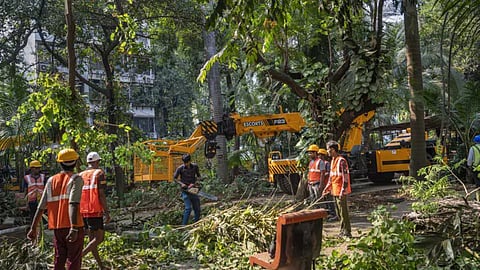
Versova’s Nana Nani Park is one such place. A community space in the Seven Bungalows neighbourhood, the park has been at the centre of a prolonged battle between residents and civic authorities over the Mumbai Coastal Road North project. On November 18, 2026, the Brihanmumbai Municipal Corporation (BMC) began cutting down trees inside the park to make way for the infrastructure project, despite months of objections and protests from local residents.
The park, which opened in 2001, was once a dumpsite that was transformed into a much-loved public garden through a community-led initiative. Over the last two decades, it has become a fixture in the lives of Versova residents, particularly senior citizens, children and families. With its walking tracks, open gym, children's play area and shaded pathways, the park attracts an estimated 90 to 130 visitors every day. It is also a social hub, with senior citizens gathering for weekly karaoke sessions.
The proposed construction is part of the Versova-Bhayandar Coastal Road, an extension of Mumbai's larger coastal road network intended to improve north-south connectivity. While the project promises to ease traffic congestion, its impact on existing neighbourhood ecosystems has become a point of contention. Under the revised plan, an elevated road will pass over the park, supported by pillars constructed within its premises. The latest reported plan involves felling 184 trees and transplanting another 164 to a site in Seven Bungalows, Versova.
In February and March, more than 3,200 objections were submitted to the BMC, with over 100 residents and environmental activists attending a public hearing to challenge the proposed alignment. One alternative they suggested was shifting the road's exit approximately two kilometres north, towards Versova beach. They also proposed stacking the carriageways vertically to reduce the project's footprint and protect the park and adjoining mangroves.
Nana Nani Park is a citizen's park built painstakingly and lovingly over nearly three decades. It is a green lung of the area, the trees in it are decades old, mature trees that were mercilessly hacked down yesterday using chainsaws. They will impact our AQI, dust levels, noise pollution, everything. It is a turn for the worse in a city that is already struggling to breathe. The transplantation angle is a farce because it doesn't benefit us the citizens, who have lost this green cover. The government and local MLA keep saying the park will be restored under the bridge but has anyone ever seen anything thrive underneath a bridge. It is a colossal loss for residents of this area and the city overall. I have grown up in front of this park, my home address says opposite Nana Nani Park, alas, no more.
Natasha Patel, resident near Nana Nani Park
Mature trees provide shade, support local biodiversity, absorb carbon and help regulate temperatures. Transplanting them elsewhere does not necessarily recreate the ecosystem they have sustained over decades. Environmental activists have also questioned the accountability surrounding tree transplantation, including whether the relocated trees will survive and whether compensatory plantations can genuinely replace what is being lost. Residents have warned that the elevated structure could further restrict sunlight, damage existing vegetation and make parts of the park unusable.
The BMC, however, maintains that the project has received the necessary permissions and that the tree-fellingand compensatory plantation plans have been approved by the Tree Authority. On November 18, when workers began cutting trees, residents and environmental groups returned to the park to oppose the work. Four citizens were detained during the protest, according to Mid-Day.
There is a larger question here about who gets to decide what progress looks like in a city. Infrastructure is necessary, and better connectivity matters, but development cannot keep coming at the expense of the very neighbourhoods it claims to serve. A coastal road might make a commute shorter, but what happens to the people who lose their everyday spaces in the process? For the residents of Versova, Nana Nani Park was a place to find some respite from the city. And that is not something that can simply be replanted elsewhere.