
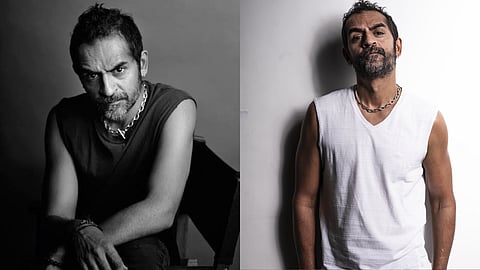
Back To The Source: Karsh Kale Talks Reinvention, Collaboration, & His Creative Legacy

In this exclusive interview ahead of CultureCon 2026, Karsh Kale discusses his return with ‘Dust’, the legacy of the Asian Underground, cross-cultural collaboration, and what it takes to build a creative practice that endures beyond trends.
Karsh Kale has spent much of his career resisting the urge to fit neatly into one box: DJ, music producer, composer, percussionist, tabla player, drummer, guitarist, keyboardist, arranger, engineer, producer and remix artist... he has done it all. Over nearly three decades, he has moved between Indian classical music and electronica, jazz and rock, composition and production, film scores and live performance. More recently, painting, too, has become part of his practice.
This restless movement between disciplines, coupled with a commitment to experimentation and reinvention, makes Kale the ideal person to address the questions at the heart of CultureCon — one of India’s largest creative conferences — which returns to Mumbai on August 6 and 7, 2026. Presented by Art X Company and Festivals From India in collaboration with the NCPA, the fourth edition of CultureCon brings together more than 40 artists, entrepreneurs, cultural practitioners, educators and industry leaders to consider the systems underpinning India’s creative economy and how they might be reimagined tomorrow.
Ahead of his session with at the NCPA’s Experimental Theatre on August 6, where Kale will join Shilpi Gupta for ‘Decoding a Cultural Movement: First Principles’, the legendary musician spoke to Homegrown about the enduring legacy of the Asian Underground, the changing nature of cultural exchange, and why authenticity remains an artist’s greatest creative asset.
You returned to making your own music earlier this year with ‘Dust’, after almost a decade-long gap between solo albums. During that period, you also immersed yourself in painting. How did stepping away from releasing your own music and working in a visual medium change your relationship with creativity?
Firstly, I didn’t really take a 10-year break from music. I stopped making my own albums. I’ve always thought of myself as an album artist, and until then I was releasing one every year or two. During that gap, I was still composing, producing for other artists, and doing commercial work, but I wasn’t making music for myself anymore. I realised I was moving further away from why I started making music in the first place. Painting became a way to reconnect with that source of creativity because I was doing it entirely for myself. There was no audience in mind. I was seeing what would emerge. That freedom reminded me what it means to be an artist beyond the work you’re hired to do. When you’re working on films, television or commercial projects, you’re using your skills to realise someone else’s vision. But artists are storytellers — we also have our own stories to tell. That period was really about finding my way back to the source from which I create.
You mentioned the commercial side of creative practice. You emerged during the Asian Underground movement, which transformed how South Asian diasporic music was perceived globally. That was before streaming platforms, social media and AI reshaped the industry. What was that moment like, and how has making music changed creatively and commercially since then?
I think everyone experiences a moment when their identity begins to solidify. That’s what was happening across artistic communities in cities like London, New York, Paris and San Francisco. These were creative renaissance periods where artists were rediscovering identity through music, dance, visual art, writing and performance. Different disciplines were inspiring one another, and that collective energy eventually became what people called the Asian Underground. It gave us a shared space where all of us could exist together. Today it’s more difficult because scenes are created very quickly and disappear just as quickly. We spent years building something from the ground up, and that kind of investment helps a movement stand the test of time. That was one of the great advantages of emerging in the mid-to-late ’90s.
Those scenes were deeply rooted in particular cities and communities. Today the music industry is far more global and internet-driven. How can artists ensure that cultural exchange benefits the communities and traditions they draw from, instead of reducing culture to a commodity?
Back then, we were very conscious about how traditions were being brought together. It wasn’t just Indian music with electronic beats — it was music and culture from all over the world mixing in new ways. The important thing was that people from those cultures weren’t just giving their approval; they were actively involved in creating something new.
Today it’s much easier to sit in a bedroom, ask for “Indian-inspired Afro house” and generate something without ever engaging with the culture itself. Artists now have the entire world at their fingertips.
The real question becomes: what is your own design within this enormous universe of possibilities? When you discover that, you find your most authentic voice and ultimately your strongest identity as an artist. Trends will always exist, but they aren’t necessarily the story you want to tell. In some ways it’s become both easier and harder to maintain that balance.
You’ve collaborated across genres, traditions and cultures throughout your career. Looking back over the past 25 years, what have those collaborations taught you about creating work that’s rooted in tradition while still feeling new?
I never approached collaboration thinking, "I want to combine this tradition with that one." These were simply the sounds that appeared along my own artistic journey. I began as a tabla player, so Indian classical music naturally became the first tradition I started blending with the other music I was studying — jazz, electronic music, progressive metal, and many others.
The biggest lesson I’ve learned is that we share far more similarities than differences across cultures. It’s about finding that point where we can recognise that, even if we don’t speak the same language, we speak the same musical language. We’re telling the same story, even if we’re playing different characters within it. That understanding has given me enormous creative freedom.
This year’s CultureCon theme is ‘Creative Economy: Culture, Capital, Commerce and Careers’. Having witnessed the industry’s transformation over nearly three decades, what do you think it takes to create meaningful work and lasting cultural impact in today’s creative economy?
It comes down to what audiences are truly investing in over the long term. Any artist can build a campaign, release a single, generate buzz and get impressive numbers. But if people immediately move on to the next thing, what have you really built? The challenge is creating work that makes people want to stay connected — not just with one song, but with you as an artist. I’ve found that whenever I’ve been completely truthful in my work, whenever my intentions have been honest, the music has reached people more deeply and lasted much longer than ideas designed to grab attention. Whether it’s a stylistic choice or a marketing strategy, authenticity has far greater staying power. People respond when you’re saying something that genuinely belongs to you.
At CultureCon this year, your session will explore how experimentation, collaboration, and cross-cultural exchange can shape the future of music and creative practice. As you enter a new phase of your career after ‘Dust’, what should visitors who may have a particular idea of you and your music expect from your session, and what do you hope artists and creative practitioners will take away from it?
I don’t know how much I’ll be able to surprise people at this stage. Those who’ve followed my work will probably gain a deeper understanding of my creative process. People often develop fixed ideas about artists based on what they see online, but we’re all much more dynamic than our public personas suggest.
What I hope people take away is how I’ve managed to sustain a career over nearly three decades. It certainly hasn’t been by repeating the same thing. It’s been about adapting and taking a broader view of what I do.
I’ve worked in almost every role imaginable within music — as a composer, tabla player, Indian classical musician, drummer, guitarist, keyboardist, arranger, engineer, producer, remix artist and percussionist. Seeing your craft from multiple perspectives is one of the best ways to survive constant change.
You’ve worn so many hats over the past three decades. Looking back now, how do you think about legacy now, compared with when you first started making music in the late 90s and early 2000s? Do you think about legacy?
When I was younger, I had much loftier goals because the sky felt like the limit. I was an ambitious young artist seeking to make a lasting cultural impact. When my first album came out and I started travelling the world, I was surprised by how many people connected with the music. As I’ve grown older and released more music, my understanding of legacy has evolved. Today, I'm much more attuned to people's personal journeys with my music. It means far more to me than awards or status to hear that a song helped someone through a difficult time. When I think about my legacy now, that’s what I hope it is — the role my music has played in people’s lives. Hearing those stories has been the most encouraging thing and the biggest reason I continue making music.
CultureCon 2026 returns to Mumbai for its fourth edition, bringing together artists, entrepreneurs, writers and cultural leaders for two days of conversations on the future of creativity, careers and collaboration. Presented by Art X Company and Festivals From India, in collaboration with the National Centre for the Performing Arts (NCPA), the conference will take place on August 6 & 7, 2026. Follow @cultureconindia on Instagram.
Event Details:
📍 Where: National Centre for the Performing Arts (NCPA), Nariman Point, Mumbai
📅 Date & Time : August 6 & 7, 2026 |10am Onwards
🎟️ Ticket Price: ₹1799 onwards
If you enjoyed reading this, here’s more from Homegrown:
Ancient Rhythms, Future Sounds: Pablo Dutta Reinterprets A 300-Year-Old Odishan Dance
Yung Raja & Mali Turn Heartbreak Into A Tanglish Love Letter On ‘forever’
The Gospel Of Jai Paul: How a Stolen Laptop & 10 Years Of Silence Built Music’s Weirdest Cult
