
- HOMEGROWN WORLD
- HGCREATORS
- HGEXPLORE
- HGVOICES
- HGSHOP
- CAREERS
- ABOUT US
- CONTACT US
Opening on 25 July 2026 at the Museum of Art & Photography (MAP) in Bengaluru, 'A Moving Line: 1500 Years of Indian Visual Storytelling' is a major exhibition curated by graphic novelist Amruta Patil. Featuring more than 250 works, the exhibition traces the evolution of visual storytelling in India, from living traditions such as kaavad and pattachitra scrolls to iconic comics, graphic novels, political cartoons, feminist and queer narratives, web comics and digitally generated works.
Stories in the Indian subcontinent have travelled through painted scrolls, temple walls, portable shrines, newspaper cartoons, comic books, graphic novels and, more recently, digital screens, for centuries now. A new exhibition at Bengaluru's Museum of Art & Photography (MAP) traces this remarkable journey, bringing together more than 250 works that explore how visual storytelling has evolved over the last fifteen centuries.
Opening on 25 July 2026, A Moving Line: 1500 Years of Indian Visual Storytelling is curated by acclaimed graphic novelist Amruta Patil and is among the first exhibitions of its scale to place India's living storytelling traditions alongside modern comics and graphic narratives. Spanning generations, the exhibition examines how images create meaning and suggest movement.
The title itself operates on multiple levels. A moving line can signify progress and transformation, but it also gestures towards the emotional power of visual narratives, their ability to move audiences across time, place and experience. Through this lens, the exhibition challenges the long-held perception of comics and illustrated storytelling as a lesser art form, positioning them instead as vital cultural records that reflect how India has imagined over the years.
The exhibition begins with some of the country's oldest visual storytelling traditions. Visitors encounter the kaavad, a portable painted shrine whose panels unfold as storytellers narrate tales from village to village, alongside pattachitra scrolls that combine image and performance. From there, the exhibition traces the emergence of modern comics, featuring beloved titles that shaped generations of Indian readers, including Amar Chitra Katha, Tinkle, Chacha Chaudhary and The Phantom.
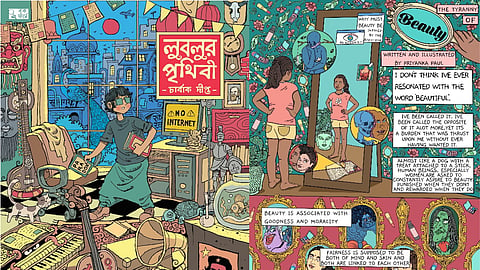
A Moving Line expands the conversation to include Bengal's early comic strips and political cartoons, contemporary graphic novels, feminist and queer visual storytelling, and the work of artists and collectives who continue to push the medium in new directions. Featured works range from the politically charged narratives of graphic novelists such as Sarnath Banerjee to the experimental storytelling practices of groups like the Kadak Collective.
The exhibition also looks ahead, showcasing web comics, augmented-reality projects and digitally generated works that demonstrate how visual storytelling continues to adapt alongside technological change.
The exhibition attempts to bring together works that have often remained inaccessible and by presenting these materials within a shared space, MAP creates a rare opportunity to view Indian visual storytelling as a continuous tradition. Accompanied by a publication edited and produced by MAP, featuring newly commissioned essays and graphic narratives, A Moving Line invites visitors to consider how have visual stories shaped who we are, and what might the future of visual storytelling look like.
If you enjoyed reading this, here's more from Homegrown:
In Shantipur, Pranoy Sarkar Found The People Behind The Fabric
No Auditions & No Experience Strangers’ Choir Is Building Community Through Music
5 Must-See Contemporary Art Exhibitions In Delhi, Mumbai & Kolkata This Season
