
- HOMEGROWN WORLD
- #HGCREATORS
- #HGEXPLORE
- #HGVOICES
- #HGSHOP
- CAREERS
- ABOUT US
- CONTACT US

From Prakash Jha’s ‘Rajneeti’ to Maniratnam’s ‘Raavanan’ and Jayarajan’s ‘Kaliyattam’, Indian filmmakers have always relocated canonical stories into specific regional and historical contexts. In these retellings, Shakespeare’s plays and Indian epics become vehicles for exploring caste, militancy, underworld power, and rural politics, turning adaptation into a tool for examining how authority, identity, and memory operate within contemporary Indian society.
Adaptations, both as a process and as a product, have been omnipresent and increasingly important in popular culture over the last few decades. In her book, A Theory of Adaptation (2007), literary theorist and critic Linda Hutcheon argues that “an adaptation is a derivation that is not derivative, a work that is second without being secondary.” In other words, an adaptation of an existing work does not necessarily have to play by the same rules as those established by the original.
Since watching Christopher Nolan’s adaptation of Homer’s Odyssey in August (twice, I might add), I have been thinking about how this is especially true for Indian adaptations. Be it Prakash Jha’s ‘Rajneeti’ (2010), an adaptation of the Mahabharata set in modern India which follows the power struggle between two factions of a political family loosely based on the Gandhis; to Maniratnam’s ‘Raavanan’ (2010), a modern-day adaptation of the Ramayana based in the Western Ghats’ wilderness, these adaptations reveal more about the region and time they are set in than retracing the narrative arc of the source materials they are based on.
According to critical theorist Homi Bhabha’s account of cultural hybridity, such works occupy an in-between space, neither simply “Indianising” a foreign text nor faithfully reproducing it. They make the borrowed story answer to local histories, anxieties and desires.
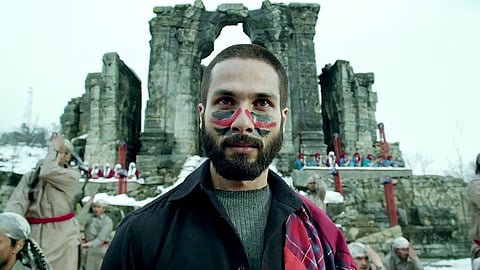
This goes beyond better-known adaptations such as Vishal Bhardwaj’s Shakespeare trilogy of ‘Maqbool’, ‘Omkara’, and ‘Haider’. In ‘Kaliyattam’ (1997), Jayarajan Rajasekharan Nair and Suresh Gopi’s Malayalam adaptation of Othello, Shakespeare’s Venetian general becomes a Theyyam performer in northern Kerala, and the tragedy’s racial and military hierarchies are recast through local caste and political power dynamics. The result is larger than a regional version of Othello: it questions what happens when a story about an outsider’s precarious authority enters a society where status is inherited, performed, and contested. Its unlikely setting makes the familiar tragedy newly legible as a drama of identity.
The same logic applies to ‘Maqbool’ (2003), where Macbeth’s court becomes Mumbai’s underworld; ‘Omkara’ (2006), where Othello’s jealousy takes place against caste and rural political hierarchies; and ‘Haider’, where Hamlet’s revenge plot is relocated to Kashmir during the 1990s militancy years. These are not interchangeable exercises in “desi Shakespeare”: each relocation recreates distinct political and historical contexts rooted in a specific space and time.
In the hands of Indian filmmakers, the borrowed story becomes a way of thinking through the country’s own contradictions: its inherited hierarchies, its modern anxieties, and its recurring desire to remake the past in the image of the present. The adaptation is therefore a cultural diagnostic: it shows what a society recognises in an old narrative, what it suppresses, and what it needs that narrative to say now.
