
- HOMEGROWN WORLD
- HGCREATORS
- HGEXPLORE
- HGVOICES
- HGSHOP
- CAREERS
- ABOUT US
- CONTACT US
Los Angeles-based Naya Beat is building a catalogue around South Asian music and its diasporic histories, bringing overlooked recordings back into circulation through reissues, remixes and collaborations.
In 1982, Mohinder Kaur Bhamra released 'Punjabi Disco', an album that brought Punjabi singing into contact with synthesizers and electronic percussion. Produced with her son Kuljit Bhamra in Britain, the record was pressed in a run of just 500 copies, giving it a limited circulation despite its ambitions for the dance floor. More than four decades later, its reissue by Los Angeles-based label Naya Beat brought the album back into circulation, along with the story of a musical experiment that had spent years beyond the reach of a wider audience.
The record offers a useful introduction to Naya Beat’s interests. Founded by Filip Nikolic and Raghav Mani, the label focuses on music from the subcontinent and its diaspora, tracing connections between South Asian musical traditions and the clubs, studios, and independent scenes that have helped shape them. Its catalogue makes room for records that travelled through community networks, independent releases and specialist dance floors, even when wider music histories had little space for them. The label’s work also raises a question about who gets remembered when musical histories are written; whose records receive reissues, whose experiments find new listeners, and which sounds are recognised as part of a broader story of dance music.
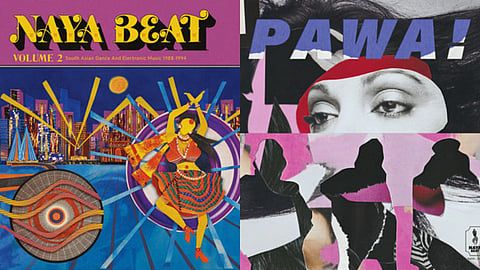
Naya Beat’s forthcoming 'Select: Remixes and Reworks 2', which comes out on October 16, 2026, brings this interest into the present through four remixes drawn from its catalogue and wider network of collaborators. The EP follows the familiar format of the disco 12-inch, giving producers room to reinterpret existing songs for DJs and club audiences. Its tracklist brings together Woolfy vs Projections, label founders Turbotito and Ragz, Thomaas Banks of Psychemagik, and Dino Soccio of Pleasure of Love, with vocals and original material connected to artists including Piya Malik, Pallavi Sharda, Pinky Ann Rihal, Asha Puthli and Say She She.
The first track, 'Nainan Da Pyar De Gaya (Woolfy vs Projections Remix)', features Piya Malik and revisits a song associated with Turbotito and Ragz’s work around the Punjabi Disco project. Greek duo Boys’ Shorts provide the source material for 'Going Out Hoping To See You, reworked by Turbotito and Ragz with vocals by Australian Indian actor Pallavi Sharda. On the second side, Thomaas Banks takes on Tu Aaja, a song by British Asian new wave artist Pinky Ann Rihal, while Soccio gives Pawa!, the collaboration between Asha Puthli and Say She She, an extended disco mix. The four selections bring together artists and musical histories from different corners of the diaspora, with the remix format providing a shared framework for their reinterpretation.
Remixing has long been central to club culture, where a song can acquire a second life through an extended instrumental passage, a reworked rhythm or a new arrangement built around a vocal. The format also gives older recordings a route into contemporary DJ sets, allowing songs to circulate among listeners who may have encountered them through a recent release before tracing their history backwards. For a label working with South Asian music, this creates room for conversations across generations and scenes, with a record’s earlier context remaining part of its identity as new producers take it in different directions.
Naya Beat’s reissue of Punjabi Disco offers a particularly tangible example of that process. The album emerged from the Bhamra family’s work in Britain, where Punjabi vocals met the electronic instruments and dance rhythms associated with disco. Its original limited pressing restricted its reach, and the album remained difficult to find for decades. The reissue brought it to a new audience, placing a family-made recording within contemporary conversations about disco, electronic music and British Asian cultural history. The story also complicates the familiar geography of dance music, whose histories are frequently told through a handful of cities, clubs and influential labels. South Asian musicians and audiences have helped shape those histories through their own recordings, parties and community spaces.
The forthcoming EP extends this approach through a mix of established and contemporary artists, — from Puthli, whose career has crossed Indian music, jazz, funk and disco, who appears alongside the New York-based group Say She She on 'Pawa! to Pinky Ann Rihal’s British Asian new wave history, that enters the collection through Tu Aaja. The inclusion of Sharda and Malik brings additional South Asian voices into the project, while the remixers connect the material to their own work across electronic and dance music. Across the tracklist, the label assembles a network of collaborations that embrace complexity and resists any single, neatly tied together account of South Asian music.
On 14 October, Naya Beat will host a listening party ahead of the release, with attendees able to hear the remixes and speak with musicians involved in the project, including Malik, Soccio, Banks, Turbotito, and Ragz. The gathering places the EP within the social life of music, where records circulate through conversation, shared listening, and the people who carry them from one scene to another.
For Naya Beat, preserving musical history also involves giving it somewhere to go next. A reissue can restore a record to circulation; a remix can introduce its musical ideas to a new set of ears; a listening party can bring the people behind the music into the same room as those discovering it. With 'Select: Remixes and Reworks 2', the label continues to work across those forms, building connections between South Asian musical histories and the dance floors that may just still have room for them.
If you enjoyed reading this, here's more from Homegrown:
On ‘The Mountain’, Gorillaz Write A Love Letter To India & The Afterlife
The Gospel Of Jai Paul: How a Stolen Laptop & 10 Years Of Silence Built Music’s Weirdest Cult
We Spoke To 4 Homegrown Artists About The Resurgence Of 'DAWless' Electronic Music
