
- HOMEGROWN WORLD
- HGCREATORS
- HGEXPLORE
- HGVOICES
- HGSHOP
- CAREERS
- ABOUT US
- CONTACT US
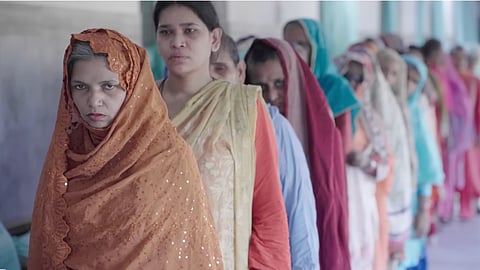
In 'They Are Given Strong Sedatives', journalist Salim Sadat investigates the lives of nearly 1,400 women living inside Karachi's Psychiatric Centre, Asia's largest women's psychiatric hospital. Through intimate encounters with women abandoned by families, survivors of abuse, and those living with mental illness, the documentary exposes the intersections of gender inequality, social stigma, and institutional care in contemporary Pakistan.
At first glance, the women housed inside Karachi's Psychiatric Centre appear to have disappeared from the world. Referred to as the "Ghosts of Karachi", the nearly 1,400 women living in Asia's largest women's psychiatric hospital occupy a liminal space between care and confinement. In 'They Are Given Strong Sedatives', Y-Kollektiv reporter Salim Sadat enters this institution to investigate what happens to the women inside its walls, and whether there is any path back into society.
The documentary reveals a complex reality of many women. Many of the women admitted to the hospital have experienced domestic violence, abandonment, neglect, or untreated mental illness. In a country where mental health remains heavily stigmatised and social support systems are scarce, the institution often becomes the destination of last resort. For some, it functions as a shelter from abuse. For others, it resembles a prison from which escape seems nearly impossible.
Through intimate conversations and observations, the film exposes the gendered pressures that shape these women's lives long before they enter the hospital. Pakistan's deeply conservative social structures often define women through their roles as wives, mothers, and caregivers, never giving them the opportunity to understand who they are for themselves. Those who are unable or unwilling to conform, whether because of mental illness, trauma, or circumstances beyond their control, frequently find themselves excluded from family and community life. Without financial independence or social support, institutionalisation becomes one of the few options available.
One of the documentary's most unsettling revelations is the routine use of strong sedatives to manage patients. The title itself points toward a system that prioritises control and containment, short-term solutions instead of actually providing these women with the care and treatment they need to get better. Sadat avoids reducing the women to victims, allowing them to speak about their desires, frustrations, memories, and hopes, restoring individuality to people whom society has rendered invisible.
The film turns an investigation of a psychiatric hospital into a critique of the structures that produce such spaces. They Are Given Strong Sedatives asks difficult questions about mental healthcare and the role gender inequality and institutional power play while creating these spaces. More importantly, it challenges viewers to confront the human cost of a society that would rather hide its most vulnerable women than support them. The women may be called ghosts, but the documentary insists on trying to bring them forward and make them visible.
If you enjoyed reading this, here's more from Homegrown:
What Do We Owe The Women Who Came Before Us? A New Art Show Might Have The Answer
‘Kuchar’ Is A Tender Exploration of Teenage Desire & The Shame Surrounding Women’s Bodies
'Women On Wealth' Is Changing The Way Indian Women Think About Money, Investing, & Ownership
