
- HOMEGROWN WORLD
- HGCREATORS
- HGEXPLORE
- HGVOICES
- HGSHOP
- CAREERS
- ABOUT US
- CONTACT US

The article looks at Odraa, a restaurant founded by Tallina Patnaik and Tanaya Patnaik, which reinterprets Odia cuisine by bringing together regional recipes and adapting them for a contemporary dining setting. It outlines how the menu draws from everyday ingredients and traditions across Odisha — from coastal curries to temple food and street snacks.
We grow up looking at Indian food as an umbrella, with the idea that most of it is heavy, oily, or packed with spices. But when it comes to Odia cuisine, it is a bit of an outlier. Characterised by its light, healthy, and subtly flavoured nature, utilising minimal oil and spices, Odia food largely consists of rice, lentils, fresh vegetables, and mustard paste, with a strong emphasis on fermented foods like Pakhala (watered rice). It is known for its ‘anti-curry’ style, focusing on natural ingredients and unique sweet treats. Due to its long coastline, seafood like prawn (chingudi) and fish are also popular in the cuisine, along with dishes that highlight regional produce like pumpkin, plantain, raw papaya, and colocasia, locally called ‘saru’.
When sisters Tallina Patnaik and Tanaya Patnaik founded Odraa in Bhubaneswar, they wanted to shed light on the same by bringing together recipes across Odisha and reimagining them for modern dining. Titled after ‘Odra’, an ancient name for the region, the restaurant focuses on regional cooking, pulling from coastal dishes, inland food traditions, and temple-linked practices, and then adapting how these are served in a restaurant setting. You see that through the ingredients that keep appearing across the menu — ambula, badi, chuda, and local greens—all of which come straight from everyday Odia kitchens.
Take the Chawala Bara, a Bolangir bus-stand staple — deep-fried rice flour dumplings that are usually eaten hot with a sharp tamarind water. Here, it still keeps that crunch and tang, just plated cleaner. The Poi Potpourri builds on poi patra and guguni, a familiar chaat-like mix, turning it into crisp spinach fritters with yogurt. The Kandhamal Roastdraws from tribal cooking in Odisha’s interior, where sweet potato and greens are common, adding badi chura and tomato khatta to give it texture and acidity. Even something like Odraa Chips and Dips comes from Berhampur papad traditions, served with chutneys like pineapple, tomato poda, and yogurt-based dips that echo what you’d find in different Odia homes.
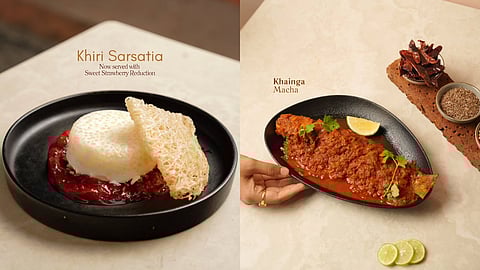
Macha Ambila, a fish curry from southern Odisha, uses dried mango (ambula) for its sourness, and here it shows up as a lighter, tangy broth that still holds that familiar sweet-sour-spicy mix. Chilli Chicken Pakoda borrows from roadside fried chicken, then finishes it with a house sauce that’s been resting for weeks with chilli and garlic. Drinks like Ganjam Crush take the idea of ambula charu — a tangy, spiced mango broth—and turn it into sharp, tangy cocktail. Desserts like Khiri Sarsatia uses sago and rice kheer with sarsatia from Sambalpur, an ingredient that’s slowly disappearing, while the Chenna Poda Rabdi Melt builds on Odisha’s baked cottage cheese dessert and pushes it into a softer, richer format. Even the Breakfast Sundae goes back to chuda chakata — flattened rice with banana — and reworks it with ice cream and caramel.
Their thalis lean heavily into seasonal and ritual-led eating. The Kartika Plate is a sattvic thali built around arua bhata (plain, unpolished rice), habisa dalma with ghee (temple-style lentils with vegetables), ghanta (mixed vegetable curry), saga (sautéed leafy greens), kandia paga (jaggery-coated puffed grain sweet), papad, and dahi manja (spiced yogurt relish) The Nuakhai thali is themed for harvest and celebration, bringing together dishes like ras bara (lentil dumplings in light gravy), karadi bhendi (fermented bamboo shoot with okra), mansa jhola or chenna tarkari (light mutton curry or cottage cheese curry), saru saga (colocasia greens), chana bhaja (spiced fried chickpeas), tamata hendua chutney (smoked tomato chutney), and khiri sarsatia (rice kheer with mustard tempering), all rooted in Western Odisha’s festive cooking.The Odraa’s summer-themed Pakhala thali builds around dahi pakhala — fermented rice that’s light, cooling, and slightly sour — served with sides like badi chura (crushed lentil dumplings), amba checha (raw mango mash), aloo poda chakta (smoked mashed potato), and chingudi checha (spiced prawn mash).
While the menu puts a new spin on Odia culinary traditions, it still preserves and exhibits a range of flavours and cooking techniques native to Odisha. You taste sour notes from sun-dried mango and fermented rice and drinks, smoke from fire-cooked meat, sweetness from milk and fruit, and the heat of mustard and chilli. It is through these sensorial flavour profiles and textures that Odraa creates a gateway to the soul of Odisha.
Follow Odraa here.
If you enjoyed reading this, here's more from Homegrown:
Eating Through Kolkata: Five Restaurants That Capture The City’s Evolving Food Culture
Inside A Restaurant Giving Goa’s Diverse Culinary Landscape A Distinctly Tamil Flair
Inside A Pune Restaurant Embracing A Slow & Deliberate Approach To Gastronomical Art
