
- HOMEGROWN WORLD
- HGCREATORS
- HGEXPLORE
- HGVOICES
- HGSHOP
- CAREERS
- ABOUT US
- CONTACT US
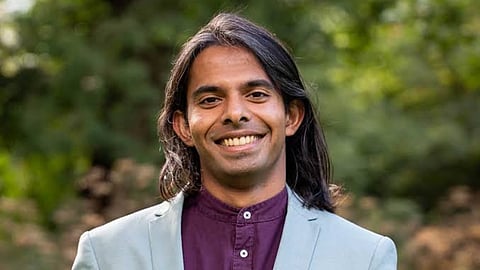
Q Manivannan's ascent to Scottish Parliament marks a significant political moment because they are an openly queer, non-binary immigrant elected without British citizenship or permanent residency. As Britain continues to grapple with post-Brexit anxieties around immigration and national identity, Manivannan’s victory under Scotland’s inclusive electoral laws has sparked both celebration and backlash.
The election of Q Manivannan to the Scottish Parliament is being viewed as a landmark moment — not only because the Tamil Nadu-born academic became one of the few Indian-origin politicians elected to Holyrood, but because they did so as an openly queer, non-binary immigrant without British citizenship or permanent residency. Representing the Scottish Greens in the Edinburgh and Lothians East regional list, Manivannan, who moved to Scotland as a PhD student, won a parliamentary seat while still on a temporary visa.
They have stated that they plan to apply for a graduate visa — which would allow them to remain and work in the UK for a longer period — followed by a Global Talent visa to potentially complete their full parliamentary term.
This result comes at a time when Britain remains deeply divided over immigration, asylum, and national identity in the aftermath of Brexit, making their election feel symbolically significant. It represents a vision of political belonging that extends beyond birthplace — one rooted instead in participation, residence, and contribution to public life.

The symbolism becomes even sharper given Britain’s increasingly hostile immigration discourse. In recent years, anti-immigration rhetoric has intensified, fuelled by anxieties around migration and the rise of right-wing populist politics. Against that backdrop, the election of an Indian-born, openly queer, non-binary immigrant to public office feels like a moment of serendipity. Unsurprisingly, it has also triggered backlash, with critics questioning whether non-citizens should be allowed to contest elections at all. Yet Manivannan’s candidacy was entirely legal under Scottish law, which permits qualifying foreign nationals to vote and stand in devolved elections, provided they meet residency and legal eligibility requirements. The underlying logic is that if people live, work, and contribute to a society, they should also be able to shape it democratically.
The reaction to Manivannan’s victory also offers an interesting contrast with India’s own relationship to political participation and foreign involvement. In India, political legitimacy is tied far more tightly to citizenship. Foreign nationals cannot vote or stand for office, and even commentary from international public figures on domestic issues frequently sparks outrage. Whether it was during debates around the Citizenship Amendment Act protests or the farmers’ protests, outside engagement has often been framed as interference rather than solidarity.
Scotland’s approach, by contrast, reflects a more expansive idea of civic belonging — one where residency can, in certain contexts, carry political legitimacy. Manivannan’s election has sparked some much-needed questions and debates about who gets to belong politically in a country, and who gets to shape its future.
