
- HOMEGROWN WORLD
- HGCREATORS
- HGEXPLORE
- HGVOICES
- HGSHOP
- CAREERS
- ABOUT US
- CONTACT US
Indian motorsport has evolved from a passion-driven pursuit to a promising talent pool. From Narain Karthikeyan's debut in 2005 to Kush Maini's recent strides, the journey highlights challenges like funding and infrastructure. Force India’s emergence and the Indian Grand Prix inspired a new generation, with racers like Jehan Daruvala and Arvid Lindblad making global waves.
Indian motorsport has never lacked passion, but it has lacked a clear road to the top. For most of Formula 1’s history the country watched from the sidelines, and even now the Indians who have raced in the sport fit comfortably on one hand.
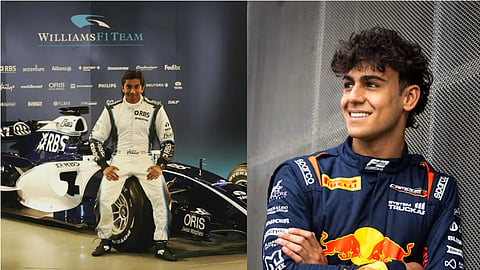
Narain Karthikeyan broke through in 2005 as the first Indian on the grid, driving for Jordan. Karun Chandhok followed in 2010 with HRT. For years, those two were the only Indian F1 drivers.
The turning point came without an Indian at the wheel. In 2008, Vijay Mallya’s Force India took to the grid, and a nation that had never had a team of its own suddenly had one. The early years were lean, but in 2009 the team stunned the paddock with a pole position at Spa and a second-place finish. By 2016 and 2017 it was fourth in the constructors’ championship, regularly beating rivals with far deeper pockets.

Then came the home race with the Indian Grand Prix running at the Buddh International Circuit from 2011 to 2013, with Karthikeyan racing for HRT in front of home crowds. It vanished after 2013 amid tax and bureaucratic disputes, and Force India fell into administration in 2018, re-emerging as Racing Point.
What survived was a generation raised on those races. With no home grid to wait for, they went abroad and climbed the ladder. Jehan Daruvala was among the first. After his F3 years, he spent four seasons in Formula 2 across three different teams before moving to Formula E with Maserati MSG Racing. He shared the F2 grid with Maini, the first time two Indians lined up together there
Bengaluru-born Kush Maini has gone furthest. After finishing runner-up in the 2020 BRDC British F3 Championship, he reached Formula 2 in 2023 and won the Monaco sprint race in 2025. He is now an Alpine reserve driver, and his Abu Dhabi test made him the third Indian to drive in an official F1 session. This season, with ART Grand Prix, he has taken pole in Miami and a podium at Silverstone. Behind him comes Dion Gowda, 18, who steps up to FIA F3 in 2027 with LN4 Fusion after two seasons in Formula Regional.
Arvid Lindblad, born in Surrey to a Swedish father and an Indian mother, is the first Briton of Indian heritage to race in Formula 1, making his debut with Racing Bulls this year. His grandparents were born and raised in Punjab, and he has spoken of how Partition shaped his family’s story. He set youngest-winner records in both F3 and F2, and his helmet carries the Union Jack, the Swedish flag and the Indian tricolour. He has called himself very proud of his Indian heritage.
Others are climbing behind him. Indian-American Akshay Bohra became the first Indian to win a Formula Regional European Championship race, at Imola in 2025, though he has said the budget was too high for F3 in 2026. Kai Daryanani, a Hong Kong-based Indian racer who competed under a British licence in GB3, stepped up to the Formula Regional European Championship with Trident this year.
For all the progress, the road is still brutally narrow. It is increasingly evident that talent isn’t the missing ingredient in Indian motorsport, rather money and patience are.