
- HOMEGROWN WORLD
- HGCREATORS
- HGEXPLORE
- HGVOICES
- HGSHOP
- CAREERS
- ABOUT US
- CONTACT US

Ahead of World Wetlands Day on February 2, 2026, India added Patna Bird Sanctuary (UP) and Chhari-Dhand (Gujarat) to the Ramsar List, bringing its total to 98 wetlands of international importance. The new designations highlight India’s accelerating commitment to wetland conservation amid rising ecological pressures.
Ahead of World Wetlands Day on February 2, 2026, India added two new wetlands to the Ramsar List of Wetlands of International Importance, strengthening its position as one of the fastest-growing contributors to the global network of protected wetlands. With Patna Bird Sanctuary (Uttar Pradesh) and Chhari-Dhand Wetland (Gujarat) now designated as Ramsar sites, India’s total protected wetlands increase to 98, highlighting a renewed national emphasis on ecological restoration and wetland management.
Adopted at the Convention on Wetlands of International Importance especially as Waterfowl Habitat in 1971 in the Iranian city of Ramsar, the Ramsar Convention is the oldest international treaty focused on environmental protection, dedicated to promoting the conservation and sustainable use of wetland ecosystems that regulate water flow, support biodiversity, buffer climate effects, and sustain millions of livelihoods. For India, a country characterized by monsoonal cycles, river plains, delta systems, and flood-dependent ecosystems, the convention offers both an international conservation framework and a clear and urgent reminder that wetlands are vanishing faster here than in many other ecosystems.
The Patna Bird Sanctuary, the first of India’s newest protected sites, is a small yet ecologically significant wetland located in the Etah district of Uttar Pradesh. Spread over approximately one square kilometre, it exemplifies the outsized importance of small wetlands in the Gangetic plain. The sanctuary is home to many migratory and indigenous waterbirds, including ducks, geese, herons, egrets, and several vulnerable species that rely on India’s north-central wetlands as wintering or stopover habitats. Its inclusion on the Ramsar list acknowledges its biodiversity and the pressures it faces from changing land use, groundwater extraction, and agricultural expansion.
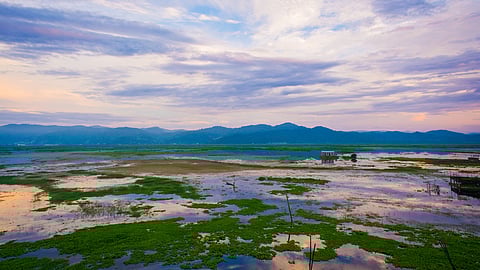
The second site, Chhari-Dhand, is situated at the edge of the Thar Desert in Kutch, Gujarat. Unlike permanent wetlands, Chhari-Dhand is a seasonal, shallow lake fed by monsoon runoff and surrounded by dry grasslands. Its mosaic of saline flats, marshes, and scrub desert makes it one of the most distinctive ecological zones in western India. The wetland supports over 200 bird species, including migratory cranes, raptors, and threatened waterbirds. The surrounding landscape is also home to mammals adapted to desert life, such as wolves, desert foxes, and wild cats. For Gujarat, which has long sought international recognition of its western wetland systems, Chhari-Dhand’s Ramsar status marks a major milestone.
India’s rising number of Ramsar sites highlights conservation efforts amid ongoing threats such as encroachment, pollution, and climate impacts, including droughts. The Ramsar framework demands accountability through monitoring and reporting rather than penalties. The two new sites, though small, demonstrate the diversity of India’s wetland landscapes and their continued importance for biodiversity and climate stability in South Asia.
Learn more about India’s protected Ramsar wetlands here.
