
- HOMEGROWN WORLD
- HGCREATORS
- HGEXPLORE
- HGVOICES
- HGSHOP
- CAREERS
- ABOUT US
- CONTACT US

When you say 'new year, new me', what happens to the old you?
Capitalism has trained us to treat things as disposable. Appliances don’t last; phones are built to feel outdated in a year; clothes fall apart faster than they should: everything is designed to be used up and swapped for something newer. That habit of discarding has crept into how we think about ourselves too. But who you are is an accumulation — of tastes you picked up and let go of, things and people you loved and lost, and all the grief and joy you went through that shaped you. It's a lifetime of character development that you cannot just clear like cache. So this year, as a resolution if we must, let's try to work with what we already have, and build forward instead of starting over.
Here's what we have for you this week, in our same old, reliable, Culture Bulletin:
LONDISN16 is a short film that zeroes in on the everyday life of a South Asian family running a neighbourhood grocery store in East London. Through the eyes of Anju and her husband, Mayank, who took over the business from earlier generations, the documentary reveals the rhythms of family labour, and the small, habitual exchanges that anchor a community. It draws a parallel with similar shops in India, exploring how convenience culture is reshaping the role of these local hubs.
Read more about it here.
In this piece we revisit Irrfan Khan’s career as a deep engagement with stillness and interiority that set him apart from conventional screen stars. The actor built performances around subtle emotional currents — from early work in parallel cinema to internationally recognised roles in films like The Lunchbox and The Life of Pi. The piece expounds on how across genres and industries, Irrfan's craft drew attention to the power of understatement in a cinematic landscape often defined by stardom.
Read it here.
Tinariwen’s music traces its roots to the harsh realities of life in the Sahara, where exile, war, and displacement has shaped the band’s sound. Born in refugee camps and Libyan military training grounds in the late 20th century, the Tuareg collective is known for traditional melodies with guitar-driven grooves into what came to be known as “desert blues.” Over decades, that sound carried stories of survival across borders and into international stages, winning acclaim — including a Grammy — and earning Tinariwen a devoted following worldwide. This February they come to India.
Check them out here.
pero’s newest capsule collection reflects an inventive process that prioritises the art of making. Designer Aneeth Arora discusses a technique that rethinks materials and methods from the ground up, with a focus on craftsmanship and material intelligence. The pieces in 'DOT' resonate with the brand’s ongoing interest in textiles that are thoughtful in execution and rooted in practical creativity, presenting clothes that feel intentional.
Check it out here.
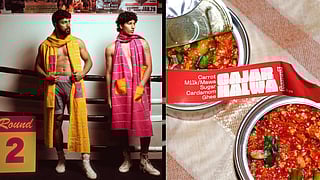
DUJA’s latest project, 'ROUND 2', returns to the brand’s core interest in using surplus export fabrics and unsold textiles to create new garments. The collection gives discarded materials a second life, transforming them into artwear that sits between functional clothing and sculptural craft. By engaging with waste streams from the fashion industry, DUJA connects sustainability with both creativity and tangible pieces people can wear
Check it out here.
Pistabarfi just introduced the beloved Indian winter favourite Gajar Halwa made with slow-cooked carrots with milk mawa, cardamom, cashews and sugar packaged in an easy open can. The Mumbai-based mithai maker is known to draw on traditional recipes while offering a ready-to-carry version of the dessert. Pistabarfi’s approach comes from a family legacy of sweets that dates back to a small shop founded in 1968, and its catalogue now includes other traditional mithai alongside this new portable halwa.
Get it here.
A growing number of Indian makers are taking the centuries-old practice of fermentation and adapting it for contemporary tastes through bottled kombucha. These brands work with local ingredients and regional flavours, offering fizzy, fermented tea drinks that nod to tradition while fitting into modern drinking habits. From recipes influenced by ayurvedic principles to playful fruit infusions, the kombucha scene in India is expanding, blending craft techniques with a focus on gut health and everyday refreshment.
Find them here.
The 6th Kochi-Muziris Biennale invites visitors to experience a city-wide conversation through art that spans the historic port’s neighbourhoods, galleries, and public spaces. The guide highlights key locations — from Aspinwall House to Mattancherry — and maps a journey that connects contemporary practice with Kochi’s cultural layers. Works on show engage with local histories, global currents, and site-specific contexts, making the Biennale an expansive field of encounters for both first-time and returning visitors.
Read our guide to the festival here.
