
- HOMEGROWN WORLD
- HGCREATORS
- HGEXPLORE
- HGVOICES
- HGSHOP
- CAREERS
- ABOUT US
- CONTACT US

“I find that violence is very ambiguous in movies," said filmmaker/actor and critic Francois Truffaut. "For example, some films claim to be antiwar, but I don't think I've really seen an antiwar film. Every film about war ends up being pro-war. To show something is to ennoble it."
After watching a whole lot of movies, I've come to believe that people are like films too. We all define ourselves by the story we have of ourselves in our minds. As we move through life, both altered and awakened by experiences, emotions and the potent relationships we develop with others, we learn that these stories have layers; a whole emotional life built upon the semiotics of our own psyche that we must decode (or pay a shrink to) — like what do you mean my parents complained about raising me, so now I can't accept gifts without feeling indebted?
Just as a so-called 'feminist' film gratifies us with revenge only after exoticizing a sexual assault scene, people, too, are full of discrepant identitites and contradictions. My favourite example is the closeted homophobe whose shame has turned him upside down.
As I finally surface from a breakup and a Film-Studies diploma (don't know which one was tougher), I wonder: Who exactly are we in this knotted pretzel of a self? and is there a way for a person to truly know another? Are we the genre-film we say we are or the subversion of it? Is there a cinephile out there who can come and read us against the grain and discover our plot holes? Or is being logged on Letterboxd with a witty oneliner all we can expect?
Anyway, time to take my meds (just coffee and a cig, I'll be fine)
Here's what we have for you this week:
Cartel Madras return with EVIDENT 2 ME, an intelligent drum and bass single made with Toronto producer Jide that channels the duo's signature mix of rap, industrial textures, jungle influences, and cinematic worldbuilding. The track pushes back against empty, algorithm-driven music culture through a sound that feels fast, urgent, and immersive, while the accompanying visual expands the fictional universe that Eboshi and Contra have been building across their music for years.
Listen to it here.
The Atlantic's new AI Watchdog database has given Indian creators a way to see whether their books, music, films, or writing have been included in datasets used to train AI models. Our story explores what the database reveals about the scale of copyrighted Indian creative work inside these datasets, why transparency matters, and what it could mean for artists, publishers, and the future of creative labour in India.
Read it here.
Netflix's Maa Behen blends crime, comedy, and feminist storytelling through satire to examine how women's lives are shaped by gossip, respectability, and social judgement. In this conversation around the film, we look at where its sharp writing and memorable central performances succeed, while also asking whether its politics and ending fully deliver on the questions it raises about female agency and solidarity.
Read it here.
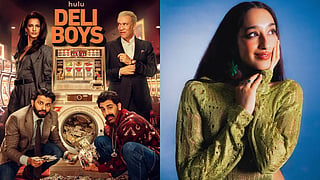
After the success of Deli Boys, actor Poorna Jagannathan speaks to Homegrown about returning for the show's second season, embracing bigger and stranger storytelling, and finding freedom in playing complex South Asian characters. She also reflects on representation, comedy, and why the series continues to push beyond familiar ideas of how brown families and identities are portrayed on screen.
Read it here.
Mahila is a diasporic fashion label creating clothing that celebrates softness, comfort, and self-expression through thoughtfully made silhouettes. Founded with the experiences of South Asian women in mind, the brand approaches fashion as something deeply personal, drawing on memory, migration, and community to create garments that help people feel comfortable in their own bodies.
Browse through it here.
Fractured Communities, written by Umar Khalid from prison, brings together essays and reflections on democracy, justice, dissent, communal violence, and the lived realities of marginalised communities in India. The book places recent political developments within a larger historical context while asking readers to think carefully about citizenship, constitutional values, and the future of public discourse.
Learn more about it here.
THE WINDOW is a new café at Hotel Diplomat in Delhi that brings together Dumbo Deli's popular Florentine sandwiches and Perch's speciality coffee programme under one roof. Designed as an all-day neighbourhood café, it serves fresh sandwiches, baked goods, coffee, and quick meals in a space created for hotel guests, professionals, residents, and anyone looking for an easy stop during the day.
Check out the menu here.
RAQS Media Collective returns to Leh after a decade with a major exhibition in the city's Old Town that unfolds across several historic sites and public spaces. The landmark project responds to the region's layered histories, changing landscapes, and everyday rhythms through installations, moving images, sound, and text, inviting visitors to experience Leh itself as an active part of the exhibition.
Find out more about it here.
What happens when a guest shift begins without a menu? Nutcase’s new recurring format, The Joker Shift, starts with a mystery box instead. For its first edition, MK and KK from Bengaluru’s Soka will arrive in Kolkata and receive a box of ingredients chosen by Nutcase, with just 36 hours to build an entirely new cocktail menu around them. The Joker Shift is an experiment in improvisation, collaboration and creative play, the first edition of which takes place on 1 July from 7 PM onwards at Nutcase, Kolkata.
Make a reservation here.
If you enjoyed reading this, here's more from Homegrown:
The Tiny Room Concert Is Creating Safe Underground Spaces for Live Music In Mumbai
The Kumaon — A Boutique Stay That's Rewriting The Grammar Of Luxury Travel With Intention
Comet’s New ‘Maachis’ Sneakers Turn Vintage Indian Matchboxes Into Wearable Artefacts
